
Kizhi Therapy Dubai: A Guide to Ayurvedic Herbal Pouch Therapy
If you have ever walked past an Ayurveda clinic and noticed the warm, herbal scent drifting out, there is a fair chance someone was having Kizhi. It is one of the most recognisable treatments in Ayurveda, and one of the most misunderstood. People often ask whether it is a massage, a hot compress, or something closer to medical treatment.
Kizhi therapy is a traditional Ayurvedic treatment in which warm herbal pouches are applied to selected areas of the body, usually with medicated oil. Interest in kizhi therapy Dubai residents can access has grown steadily, particularly among people who spend long hours at a desk, train regularly, or simply want a calmer, more attentive form of care than a standard spa session offers.
This guide explains what the therapy involves, the main types, what a session is actually like, who may want to consider it, and who should wait or speak to a doctor first. It is educational, and it is honest about what is traditionally believed and what has been properly studied.
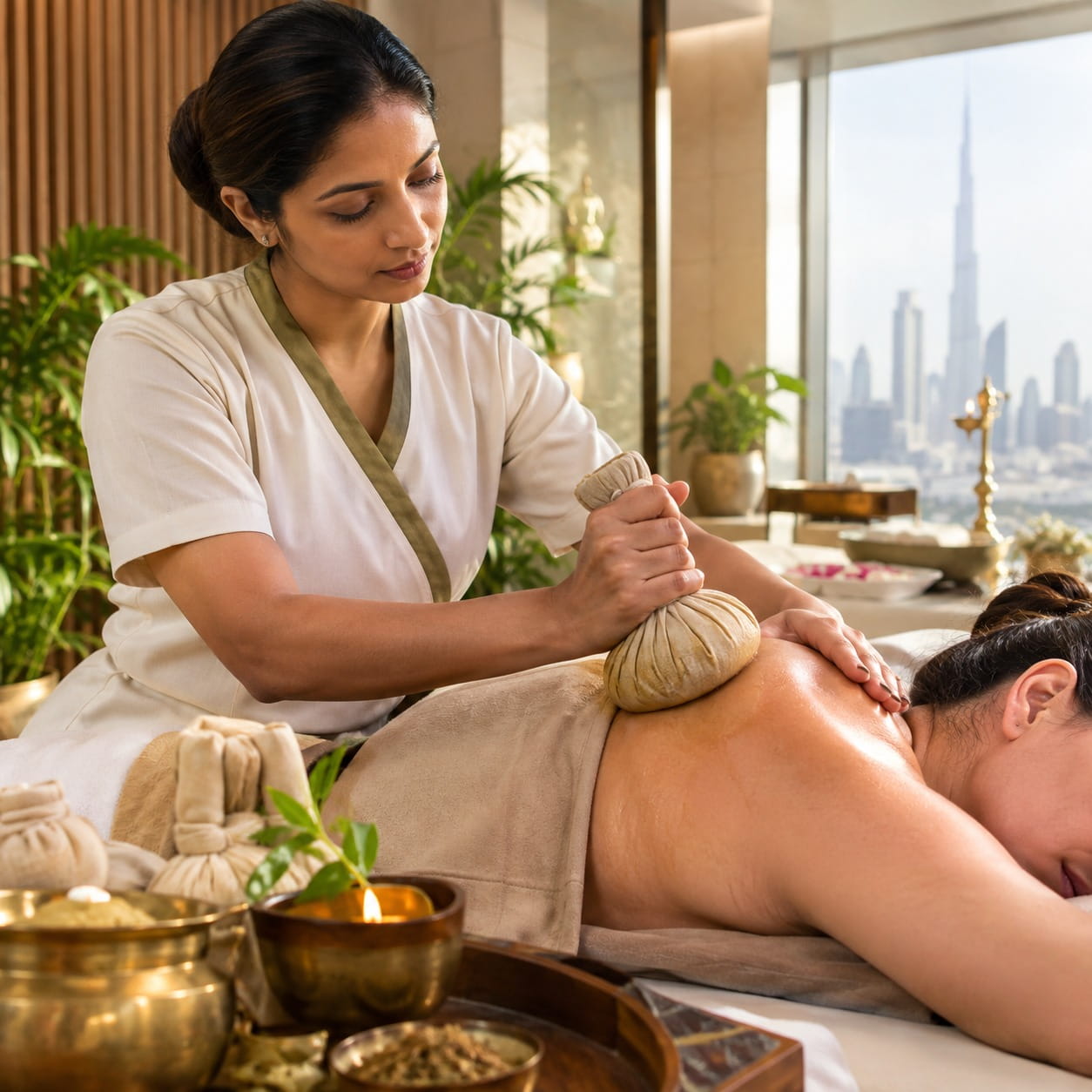
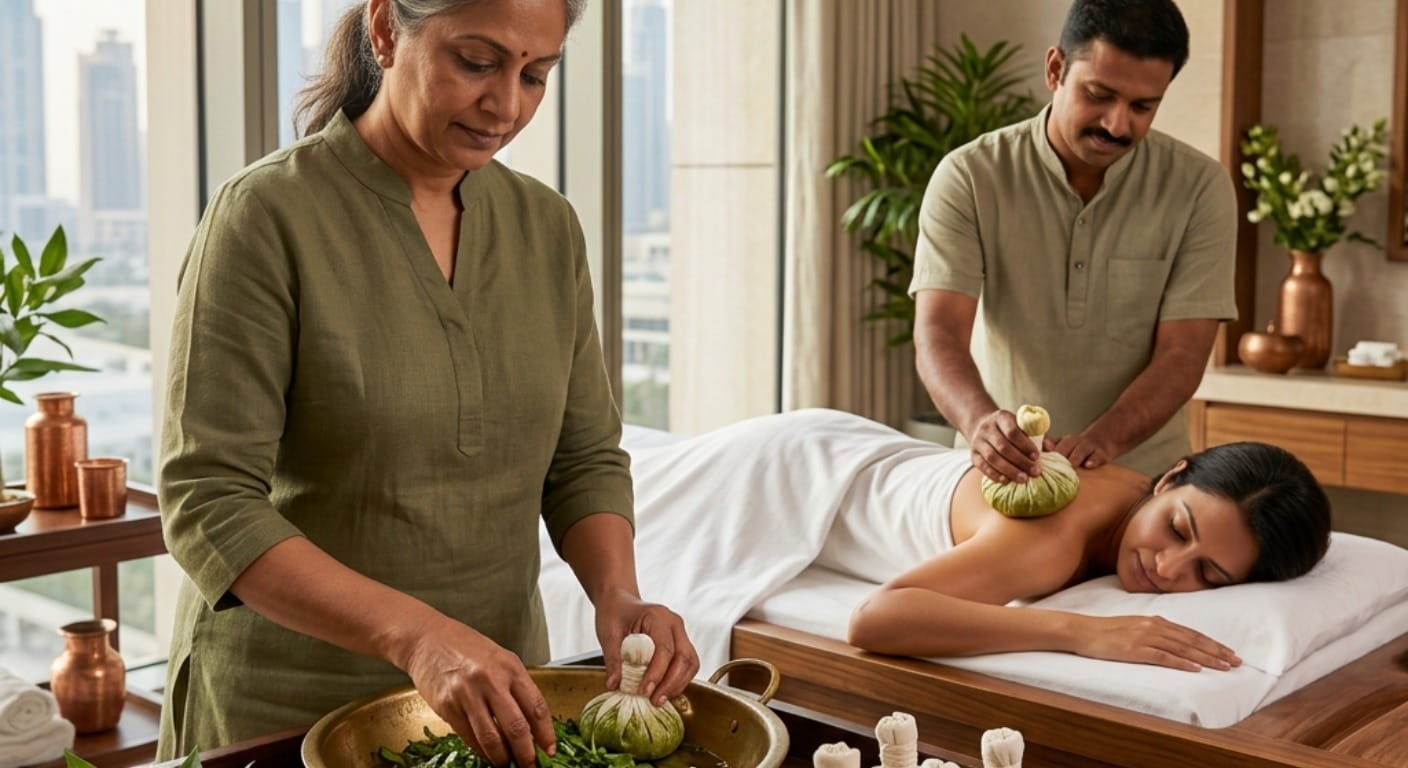
Ayurvedic Herbal Pouch ApplicationWarm medicated herbal boluses applied rhythmically to alleviate stiffness & promote deep muscular relaxation.
What Is Kizhi Therapy?
Kizhi therapy is a traditional Ayurvedic treatment that uses heated herbal pouches, gently applied to selected areas of the body. The specific ingredients, technique and treatment plan vary according to the individual's needs and the practitioner's assessment.
"Kizhi" is a Malayalam word meaning a small bundle or pouch. The pouch is made from a piece of cotton cloth, filled with herbs, leaves, powders or grains, and tied into a bundle. It is warmed, usually with medicated oil, and then applied to the body in a controlled way.
In Ayurvedic teaching, warmth combined with herbal and oil-based preparations is used to address stiffness, heaviness and discomfort. These are traditional ideas. They come from classical Ayurvedic practice and generations of clinical experience, and they are different from conclusions drawn from large modern clinical trials. Some people find the therapy deeply relaxing and comforting. That experience is genuine, but it does not mean the treatment works the same way for everyone.
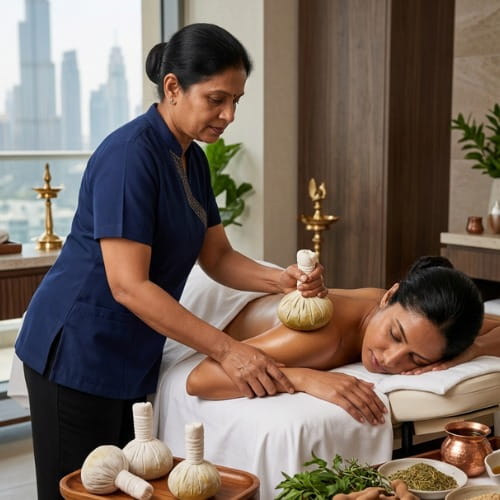
How Is It Different From a Conventional Massage?
Hands vs. Pouch Technique
A conventional massage relies mainly on the therapist's hands, with pressure and manipulation of soft tissue. Kizhi relies on the pouch. The practitioner uses it to deliver heat and herbal content, often tapping, pressing or gliding it across the skin in rhythmic movements.
Pace & Combination with Abhyanga
The pace is usually slower, and the pressure is generally gentler than in a deep-tissue massage. Some Kizhi sessions are combined with oil massage (abhyanga) before or after the pouches are used, which can make the two feel connected. We compare them in more detail further down.
How Does Kizhi Therapy Work?
A Kizhi session works by combining controlled warmth, herbal ingredients and rhythmic application to the skin. In Ayurvedic theory, this is meant to soothe and loosen the area being treated. Modern research has not fully established the mechanisms, so it is more accurate to say the approach is traditionally used for these purposes than to claim a proven physiological effect.
Preparation of the pouches
The practitioner selects the filling, cuts and measures the cloth, and ties the bundle securely. Depending on the type, the filling may be dry powder, chopped fresh leaves or cooked grain.
Heating
The pouch is warmed, commonly on a heated pan or vessel with medicated oil or a herbal preparation. A well-run clinic checks the temperature before it touches the skin, often on the practitioner's own wrist first.
Application
Using steady, rhythmic movements, the practitioner applies the pouch to the chosen area. Common areas include the neck, shoulders, back, knees and other joints, though this depends on the plan.
Adjustment
The pouch cools as it is used, so it is reheated and swapped regularly. Pressure and temperature are adjusted throughout, and you should feel able to say if anything is too hot or too firm.
Types of Kizhi Therapy
There are several forms of Kizhi, and clinics in Dubai may offer some but not all of them. One type is not automatically better than another. The right choice depends on the person, the area and the practitioner's judgement.
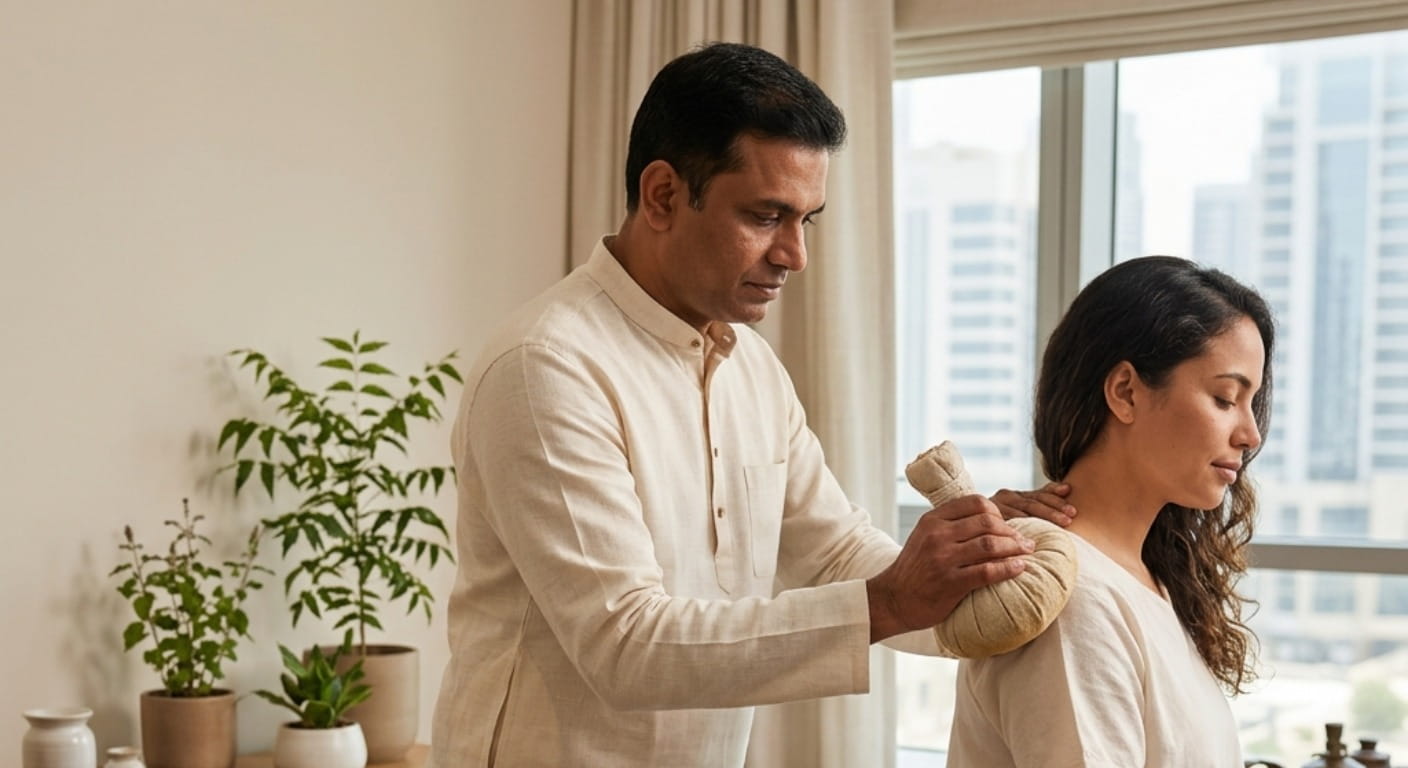 Dry & Firm Heat
Podi Kizhi
Dry Herbal Powder Pouches
Podi Kizhi uses a pouch filled with dry herbal powder (podi means powder). The powder is usually warmed with a little medicated oil in a pan before being tied into the pouch.
Because the filling is dry and the pouch can be warmed repeatedly, it is often described as a drier, firmer form of Kizhi. People sometimes explore Podi Kizhi when they want a warm, herbal treatment for a stiff neck, tight shoulders or an achy back. In traditional practice it is used for stiffness and heaviness in the body, but how well it suits you is a question for an assessment, not a leaflet.
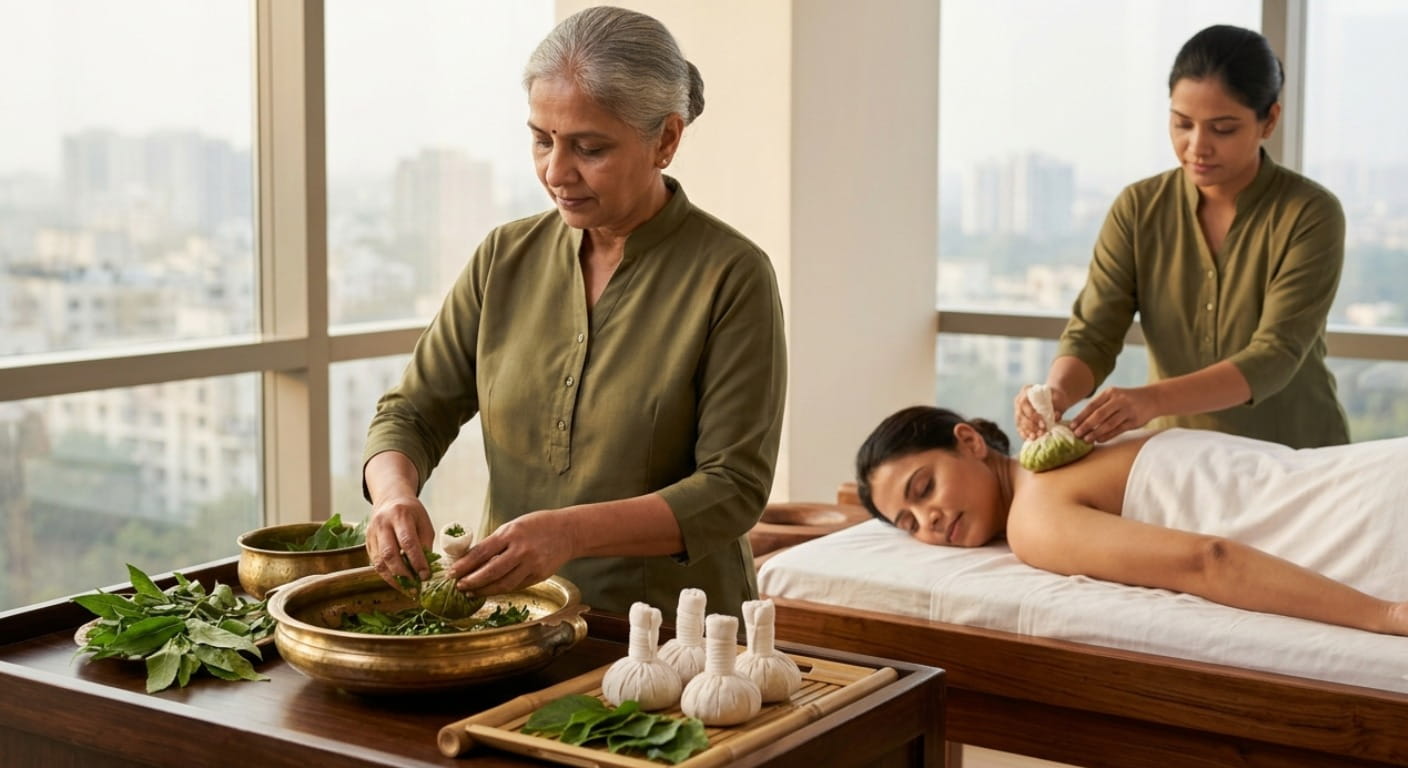 Fresh Herbal Aroma
Elakizhi
Fresh Medicinal Leaf Pouches
Elakizhi (also written Ela Kizhi or Elakizhi treatment) uses fresh herbal leaves. Ela means leaf. The leaves are chopped, lightly heated with oil and other ingredients, and tied into pouches.
The selection of leaves is where the practitioner's knowledge matters most. Different leaves are traditionally associated with different purposes, and fresh ingredients can vary in quality. A reputable clinic will tell you what is in the pouch, or at least explain why those ingredients were chosen. Elakizhi has a distinctive, fresh, green aroma, which some patients find part of the appeal.
 Nourishing & Strengthening
Njavarakizhi
Cooked Medicinal Njavara Rice Pouches
Njavarakizhi (also called Navarakizhi or Njavara Kizhi) is different in kind from the other two. Here the pouches are filled with cooked njavara rice, a medicinal rice variety traditionally grown in Kerala. The rice is cooked in a herbal decoction and milk, then tied into the pouches and applied while warm, usually alongside medicated oil.
In traditional Ayurvedic practice, Njavarakizhi is associated with nourishing, strengthening approaches rather than the drying, stimulating feel of Podi Kizhi. It is typically carried out as a structured, supervised treatment, and it is often more involved to prepare. This is one reason it is not available everywhere, and a clinic that offers it should be able to explain how it sources the rice and prepares the mixture.
If you are specifically interested in this form, ask your practitioner how it differs from the other pouch therapies and whether it is appropriate for your situation. You can also read more about our Ayurvedic treatments.
Potential Benefits of Kizhi Therapy
It helps to separate what Ayurveda traditionally says, what people commonly report, and what has been established by clinical research. For Kizhi specifically, there is limited high-quality modern evidence, so claims should stay modest.
What people most often describe is a sense of relaxation. Warmth, rhythm and unhurried attention tend to settle the body, and many people leave feeling calmer. That is a real and valuable experience, but it is not the same as treating an underlying condition.
Some also seek Kizhi for temporary comfort from muscle stiffness, such as tight shoulders from desk work or soreness after a heavy gym session. The warmth may make the area feel looser and easier to move, at least for a while. People interested in Kizhi treatment for muscle stiffness often say they notice this softening during or soon after the session.
Others explore Kizhi therapy for joint discomfort, hoping for a warm, soothing approach that supports comfortable movement. Traditionally, Ayurveda uses pouch therapies in this way, and some people feel it is a helpful part of their routine. It should not replace medical evaluation of persistent or worsening joint pain, particularly if there is swelling, redness or an injury behind it.
Other things people mention include a general sense of wellbeing, a pleasant warming sensation, and an enjoyable way to unwind after physical activity.
Two honest caveats
- •First, results vary, and one person's experience is not a prediction of yours.
- •Second, Kizhi may support comfort and wellbeing as part of a personalised plan, but it should not be seen as a cure for any disease or a replacement for medical care.
Who May Consider Kizhi Therapy?
People who may consider Kizhi therapy are generally those looking for a gentle, warmth-based Ayurvedic treatment as part of a broader wellness or recovery routine, after an individual assessment.
Someone with general muscle stiffness from long hours at a desk or on the road.
Someone feeling physically tired and wanting a restful, restorative session.
People who train regularly and want to unwind after activity.
Those looking for a calming treatment for relaxation.
People interested in supporting everyday mobility and flexibility as part of a wider plan.
Practical Context: A practical example: a person in Dubai who spends ten hours a day at a laptop, and has a tight neck and upper back, may be offered a short course of pouch therapy alongside posture advice and light stretching. A person recovering from a recent sports injury would be assessed quite differently, and might be asked to see a doctor or physiotherapist first.
That is why an individual assessment matters. The same treatment name can mean quite different things for different people.
Who Should Avoid or Postpone Kizhi Therapy?
Kizhi therapy is not suitable for everyone, and heat-based treatments need extra care. This list is not exhaustive, and your practitioner is the right person to decide what applies to you.
Fever or an acute illness. The body is already under stress, and applying heat is usually not appropriate.
Active skin infections, rashes or open wounds in the area to be treated.
A recent or acute injury, such as a fresh sprain, fracture or significant swelling. These need medical evaluation first.
Pregnancy. Whether any pouch therapy is appropriate depends on the stage of pregnancy, the area and the ingredients. Please speak to your doctor and the Ayurveda practitioner before booking.
A significant medical condition, for example heart, kidney or circulation problems, diabetes with reduced skin sensation, or a condition requiring regular medication. Tell your practitioner so they can decide whether to proceed and how.
Sensitivity to heat, or conditions that reduce your ability to feel temperature properly.
Known allergies to herbs, oils, or ingredients such as milk or rice, which are relevant for some forms.
What Happens During a Kizhi Therapy Session in Dubai?
A first session at a reputable Dubai clinic usually follows a clear sequence. Knowing it in advance tends to make first-time patients feel much more at ease.
Consultation
You will be asked about your health, daily routine, previous injuries, medication, allergies and what you hope to get from the therapy.
Assessment
The practitioner may examine the area, check how you move, and ask about your sleep, digestion and energy, as Ayurvedic assessment looks at the whole person.
Choosing the therapy
Based on this, they recommend a type of Kizhi (or decide another approach is more suitable), and explain why.
Preparing the herbs
The practitioner prepares the ingredients, which may be powder, fresh leaves or cooked rice.
Preparing and heating the pouch
The pouch is tied and warmed with oil or a herbal mixture, and the temperature is checked.
Application
You lie comfortably, often on a treatment table, with the area exposed and the rest of your body covered. The practitioner applies the pouch with rhythmic movements, sometimes after an oil massage.
Monitoring
Throughout, the practitioner checks your comfort and adjusts temperature and pressure. You should never have to put up with a pouch that is too hot.
Aftercare
You may be advised to rest for a short while, avoid cold drinks or air-conditioning directly on the skin, and delay a shower, depending on the clinic's guidance. Follow the specific instructions you are given.
As sessions in Dubai often take place in air-conditioned spaces, tell your practitioner if you feel chilly during or after, so the room and covering can be adjusted.
How Long Does Kizhi Therapy Take?
The length of a Kizhi session varies with the therapy type, the area being treated and your treatment plan. Some sessions are relatively short and focused on one area, while others, especially full-body or multi-step treatments, take longer. Because timing differs from clinic to clinic, the most reliable source is the clinic itself. Ask what the session includes (consultation, oil massage, pouch application, rest time) and how long you should allow in total.
How Often Should You Have Kizhi Therapy?
There is no universal schedule. How often someone has Kizhi therapy depends on their individual assessment, their goals, the type of Kizhi, their health history and their practitioner's recommendation. Some people have a single session for relaxation. Others are advised to have a short series of sessions over a period of time, and some return occasionally as part of a longer wellness routine. Be cautious about any clinic that gives a fixed number of sessions before assessing you. A fixed package that suits one person's body may not suit yours. A sensible approach is to review progress with your practitioner after a few sessions and decide together whether to continue, change the plan or stop.
Kizhi Therapy vs Ayurvedic Massage
Kizhi uses heated herbal pouches as the main tool, while an Ayurvedic massage relies mostly on the practitioner's hands and warm medicated oil. Both can be part of the same visit, and many treatments combine them. Here is how they usually differ:
| Key Dimension | Ayurvedic Massage vs Kizhi Comparison |
|---|---|
| Technique | Ayurvedic massage uses strokes, kneading and pressure with the hands. Kizhi uses pouch application with tapping, pressing and gliding. |
| Herbal ingredients | In massage, the herbal element is mainly in the oil. In Kizhi, the pouch contents (powder, leaves or rice) are a central part of the treatment. |
| Use of heat | Heat is built into Kizhi through the heated pouch. Massage uses warmed oil, but the heat is generally milder. |
| Objectives | Massage is often chosen for general relaxation and body care. Kizhi is traditionally chosen for more targeted, warmth-based care of particular areas. |
| Practitioner involvement | Both need skill. Kizhi requires careful temperature control and preparation of the pouches. |
| Customisation | In both cases, a good practitioner tailors oils, ingredients and pressure to the person. |
How to Choose a Kizhi Therapy Clinic in Dubai
Choosing a clinic is mostly about trust, safety and clear communication. When you are comparing Ayurveda clinics in Dubai, these are sensible things to look for:
Qualified Ayurveda practitioners. Ask who will treat you and what their training is.
Appropriate healthcare licensing. Healthcare facilities and practitioners in Dubai are regulated by the Dubai Health Authority (DHA), and you can ask to see licence details.
A proper consultation before treatment, not just a booking and a bed.
A clear explanation of the therapy, the ingredients and what you are likely to feel.
Hygiene standards, including clean linen, clean pouches and safe handling of oils.
Transparent pricing, so you know what is included before you commit.
Sound treatment protocols, with temperature checks and consent.
Practitioner experience with the specific therapy you want.
Personalised recommendations rather than the same package for everyone.
Honest communication about both benefits and limitations.
Why Professional Assessment Matters Before Kizhi Therapy
Kizhi should be chosen because it suits you, not because it is popular. Two people can both say they have "back pain" while having very different causes, and the right approach for one may be unsuitable for the other.
An assessment helps the practitioner rule out situations where heat is unwise, choose the right type of Kizhi, set realistic expectations and decide whether you might also need a medical opinion or a physiotherapy review. Where relevant, Ayurvedic care can sit alongside conventional care, and your practitioner can work with your doctor rather than in competition with them. If you have a condition that needs coordinated care, physiotherapy or other wellness treatments may form part of the plan.
Frequently Asked Questions About Kizhi Therapy in Dubai
Clear answers to the most common questions about Ayurvedic herbal pouch therapy.
Meet Our DHA-Licensed Expertise
Highly qualified doctors with decades of combined experience, committed to your healing journey with expertise, compassion, and authentic care.
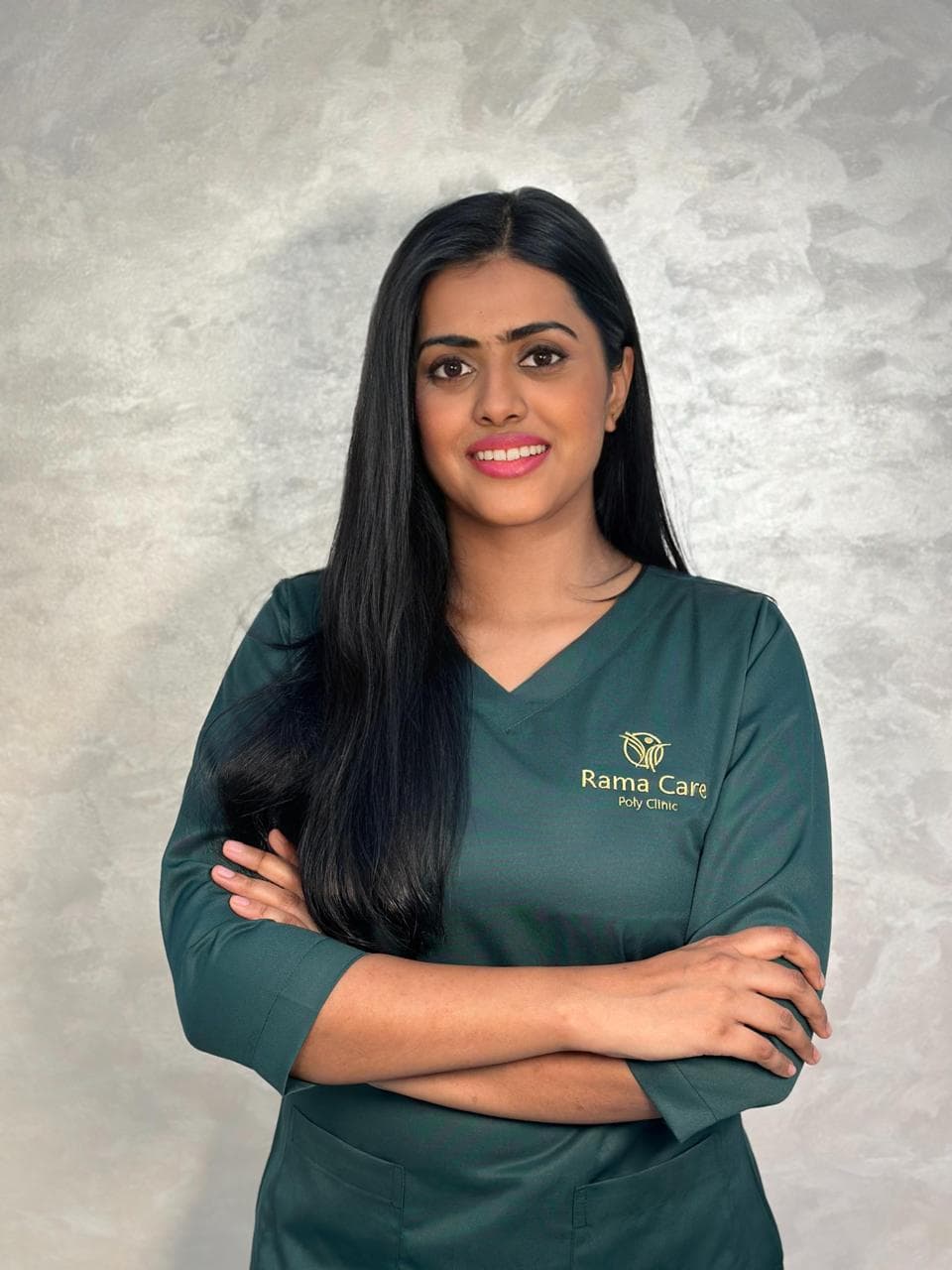
Jeena Mathew
BPT, MPT (Physiotherapy)
Musculoskeletal Physiotherapy
8+ Years ExperienceKey Expertise
- Back Pain: Targeted manual therapy & strengthening
- Neck Pain: Joint mobility & ergonomic posture advice
- Shoulder & Knee Pain: Rehabilitation

Dr. Shamna Keloth Meethal
BAMS (Ayurveda Practitioner)
General Ayurveda & Preventive Care
11+ Years Experience | DHA LicensedKey Expertise
- General Ayurveda: Prakriti evaluation & consultations
- Preventive Healthcare & Daily Routine guidance
- Ayurvedic Diet & Gut Health counseling

Soumya Abraham
Diploma in General Nursing and Midwifery | DHA Licensed Nurse | BLS Certified
Dental, Aesthetic & General Nursing Support
11+ Years Experience | DHA LicensedKey Expertise
- Assisting with dental procedures and aesthetic treatments
- Pre- and post-treatment patient care to ensure comfort and optimal healing
- Administering medications, IV therapy, and minor surgical assistance

Syamkumar Sasidharan
Diploma in Ayurveda Panchakarma Therapy
Ayurveda Panchakarma Therapy & Holistic Wellness
17+ Years Experience | DHA LicensedKey Expertise
- Delivering traditional Ayurvedic treatments including Abhyanga, Panchakarma, and Shirodhara
- Detoxification therapies and personalized lifestyle consultations
- Holistic diagnosis and restoration of body imbalances

Dr. Sahar Zomorrodi
DHA-Licensed General Practitioner | Diploma from American Aesthetic Academy
General Practice & Aesthetic Medicine
14 Years Experience | DHA LicensedKey Expertise
- Holds a diploma from the American Aesthetic Academy
- Skilled in non-surgical cosmetic procedures, skin rejuvenation, and anti-aging treatments
- Committed to delivering safe, personalized, and results-driven care
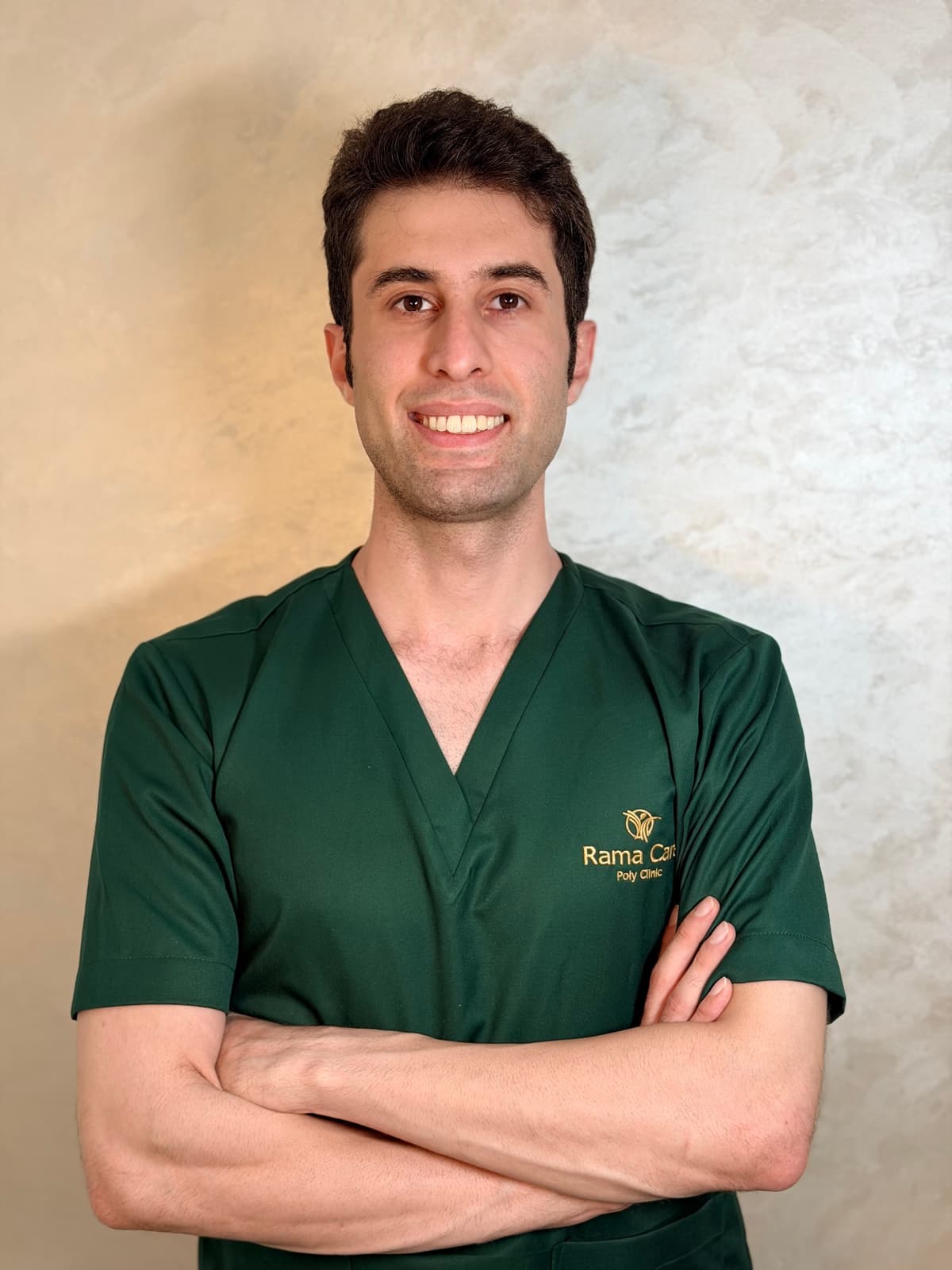
Dr. Hirbod Gilandoust
DHA-Licensed Dentist
Esthetic Dentistry & Dental Surgery
7+ Years ExperienceKey Expertise
- Advanced esthetic dental treatments
- Dental restorations and prosthetics
- Root canal treatments (Endodontics)

Dr. Aparna Balakrishnan
DHA-Licensed General & Cosmetic Dentist
General & Cosmetic Dentistry
9+ Years ExperienceKey Expertise
- Root canal treatments
- Cosmetic restorations
- Dental veneers
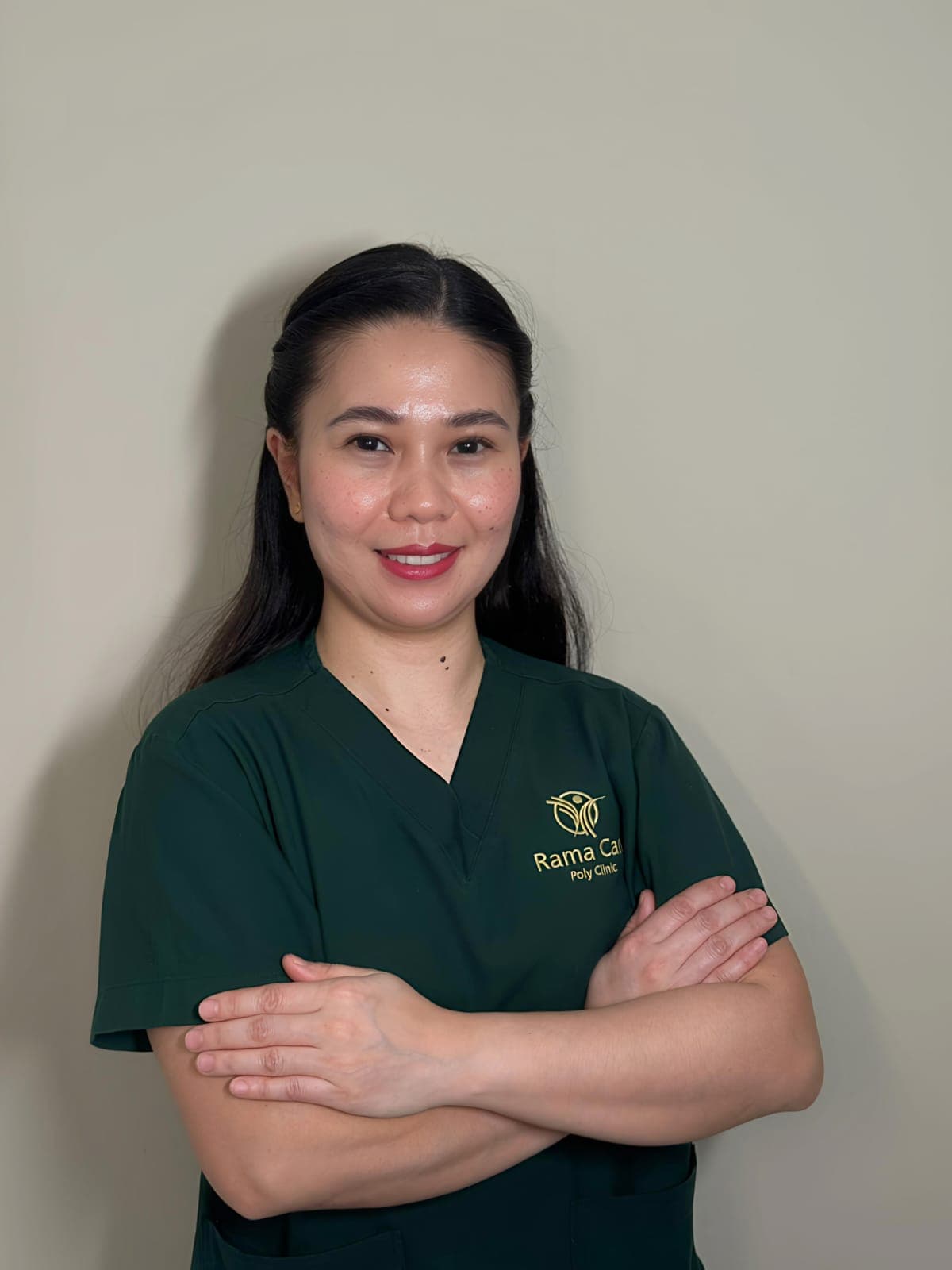
Nodainne Baves Guerrero
DHA-Licensed Beauty Therapist
Beauty Therapy & Advanced Aesthetic Treatments
10+ Years ExperienceKey Expertise
- Advanced facial treatments
- Skin rejuvenation therapies
- Anti-ageing skincare procedures

Mariya Thayyil Muhammed
DHA Licensed Ayurveda Therapist
Ayurveda Therapy & Holistic Wellness
14+ Years UAE ExperienceKey Expertise
- Traditional Ayurveda therapies
- Panchakarma support treatments
- Abhyanga and therapeutic massage

Sonita Sinaga
Licensed & Certified Aesthetic Therapist
Aesthetic Dermatology & Skin Care
14+ Years ExperienceKey Expertise
- Advanced Beauty & Aesthetic Treatment Skills
- HIFU (High-Intensity Focused Ultrasound)
- RF Microneedling
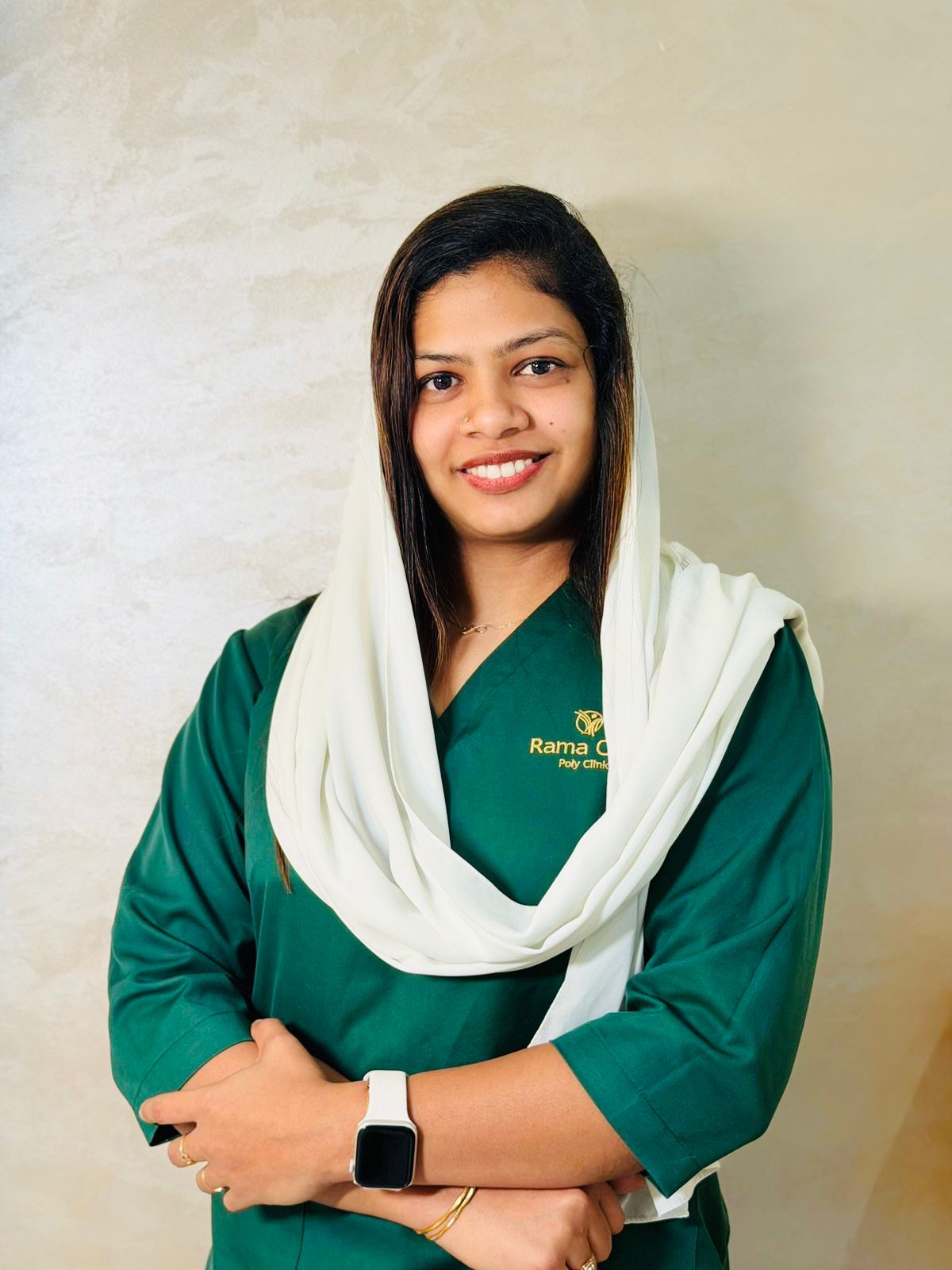
Content Reviewed by Dr. Shamna Keloth Meethal
Ayurveda & Holistic Health Specialist
BAMS · DHA Licensed Ayurveda Doctor • 11+ Years Clinical Experience · 800+ Patients Treated
Book Your Consultation Today
Take the first step towards better health and wellness. Our DHA-licensed specialists are ready to help.
Get In Touch
Call Us
+971 04 286 2006
Chat with us instantly
query@ramacarepolyclinic.com
Clinic Address
12 Al Dhiyafah Rd - Jumeirah Terrace Building,
Ground Floor, Jumeirah 1 - Dubai
Clinic Hours
Request Appointment
DHA Licensed
Certified Healthcare Facility
DHA-Licensed Team
Doctors, dentists and therapists
Open 7 Days
10am to 10pm, walk-ins welcome
4.8/5 Rating
200+ Verified Reviews
Kizhi Therapy Dubai
Ayurvedic Herbal Pouches