
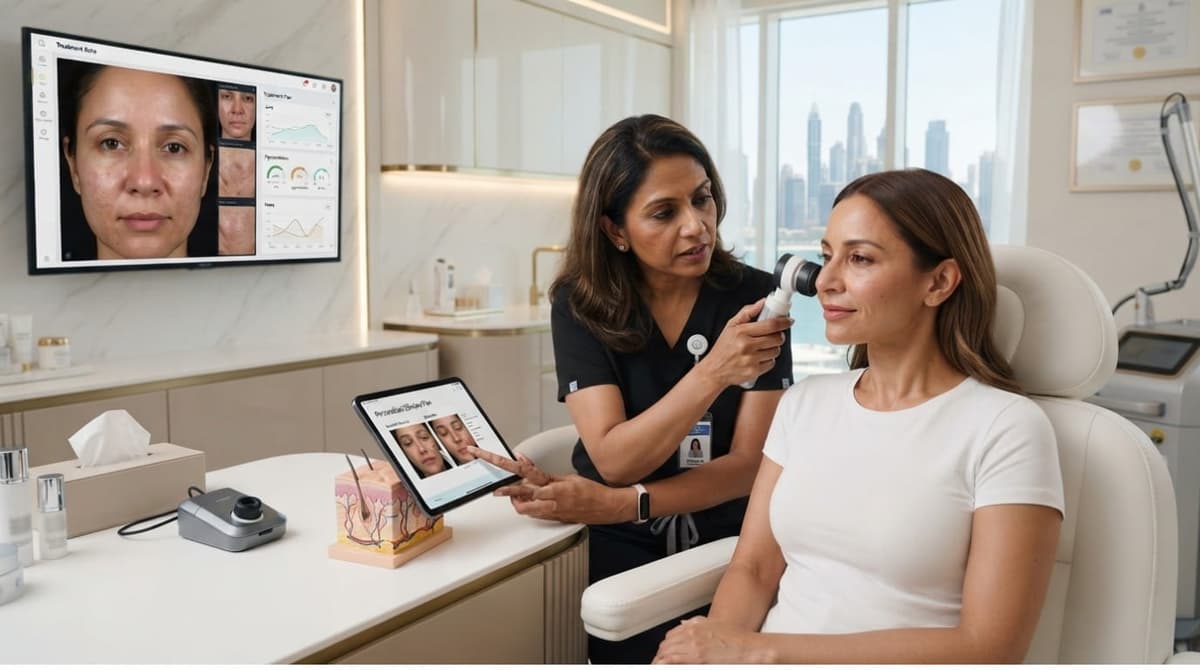
Skin Tag Removal in Dubai
If you've noticed a small, soft growth of skin on your neck, underarm, eyelid, or along a bra line or collar, you're not alone — skin tags are one of the most common benign skin findings in adults. Many people in Dubai search for skin tag removal in Dubai simply because these growths catch on jewellery, rub against clothing, or bother them cosmetically. Skin tags themselves are usually harmless, but that doesn't mean every bump on your skin is automatically a skin tag.
At RamaCare Polyclinic, our approach starts with a proper look at the growth before any treatment is discussed. A clinician will examine the lesion, ask about how long it has been there and whether it has changed, and confirm that what you're seeing is, in fact, consistent with a skin tag rather than another type of skin lesion. Only then do we talk about removal options — which may include electrocautery, cryotherapy, snip excision, or a laser-based approach, depending on the size, location, and characteristics of the tag. This page walks you through what skin tags are, why they form, how they're assessed, what removal actually involves, and when a growth deserves a closer look before anyone reaches for a treatment tool. Trying to remove a skin tag yourself at home is never advisable, and we'll explain why.
Assessed First
Every growth examined before removal
Personalised
Method matched to your lesion
Multispecialty
Full polyclinic care in Jumeirah 1
What Is a Skin Tag?
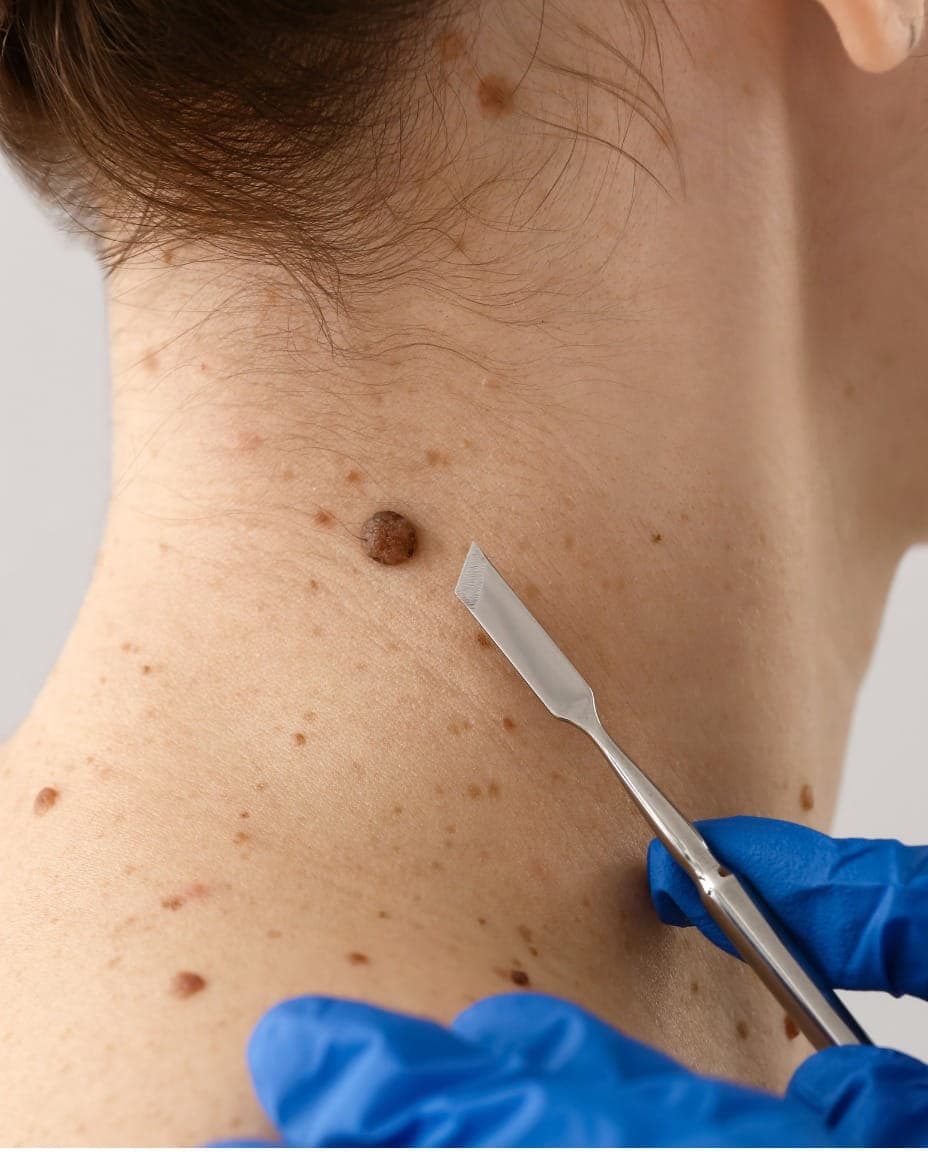
A skin tag, medically called an acrochordon, is typically a small, soft, flesh-coloured growth that hangs off the skin, often attached by a thin stalk (a "pedunculated lesion"). Skin tags most commonly appear in areas where skin rubs against skin or clothing — the neck, underarms, groin, eyelids, chest, and skin folds. They are generally benign. That said, diagnosis should be confirmed by a clinician whenever the appearance is uncertain, since several other types of skin growths can look similar at first glance.
What Is a Skin Tag?
Askin tag is a small, soft, usually flesh-coloured or slightly darker growth of skin. In medical terms it's known as an acrochordon, and it's made up of a core of blood vessels and collagen fibres surrounded by an outer layer of skin. Most skin tags are just a few millimetres in size, though some can grow larger over time. They tend to be soft to the touch and often dangle slightly from a narrow stalk, which is why they're sometimes described as having a "skin stalk."
Skin tags are extremely common — many adults develop at least one over the course of their lives, and some people develop several. They are not the same thing as moles, warts, or other types of skin lesions, although a growth can sometimes resemble more than one of these at a glance. This is exactly why a dermatological examination matters before anyone assumes a growth is "just a skin tag."
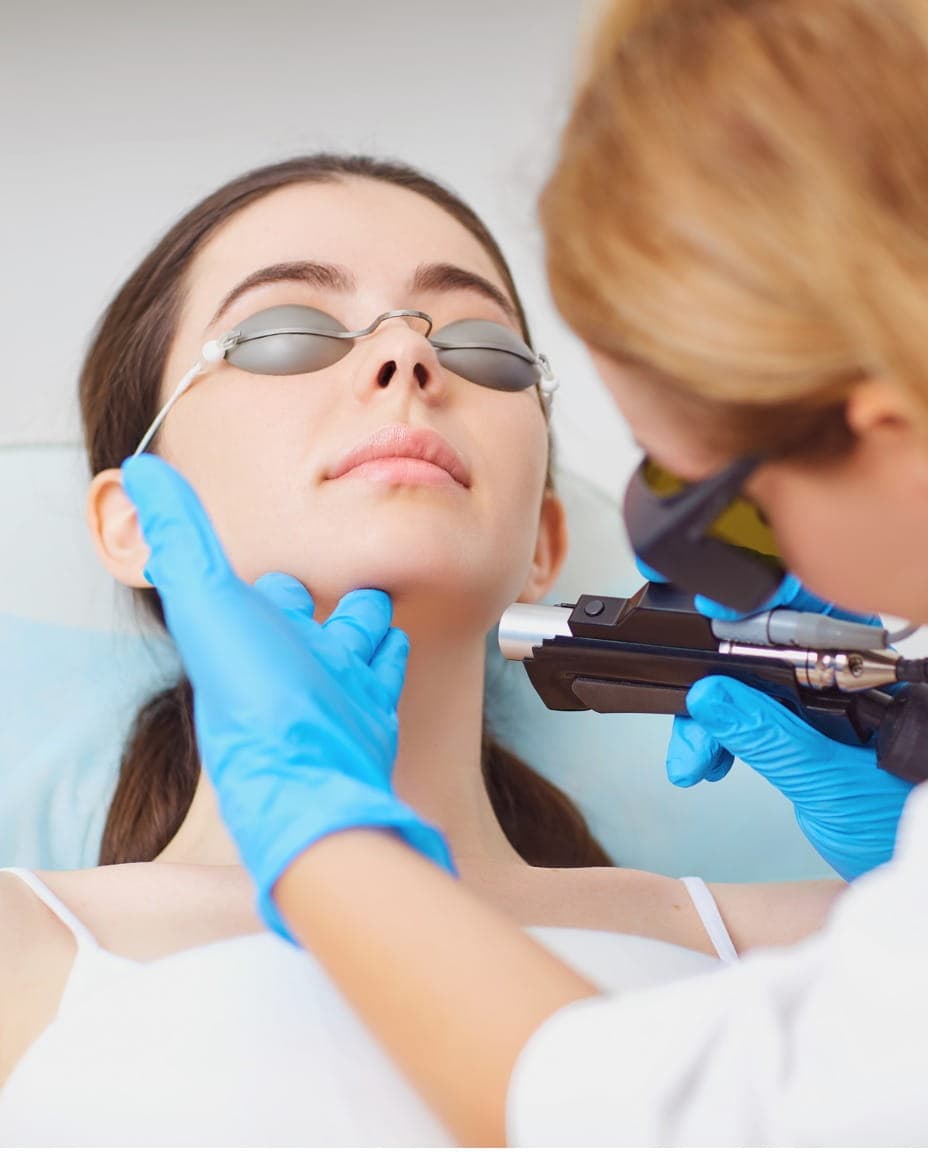
When Should You Consider Skin Tag Removal?
Removal is a personal decision in most cases, not a medical necessity. Patients typically consider it for reasons such as:
It's worth repeating: removal is not medically required for every skin tag. Many people choose to leave small, non-bothersome tags alone indefinitely, and that's a perfectly reasonable choice.
Why Should a Skin Growth Be Examined Before Removal?
This is one of the most important sections on this page, and for good reason. Skin tags can resemble other types of skin lesions, particularly when they are new, unusually shaped, or located somewhere you can't easily see them yourself. Before any removal is discussed, a clinician will typically assess:
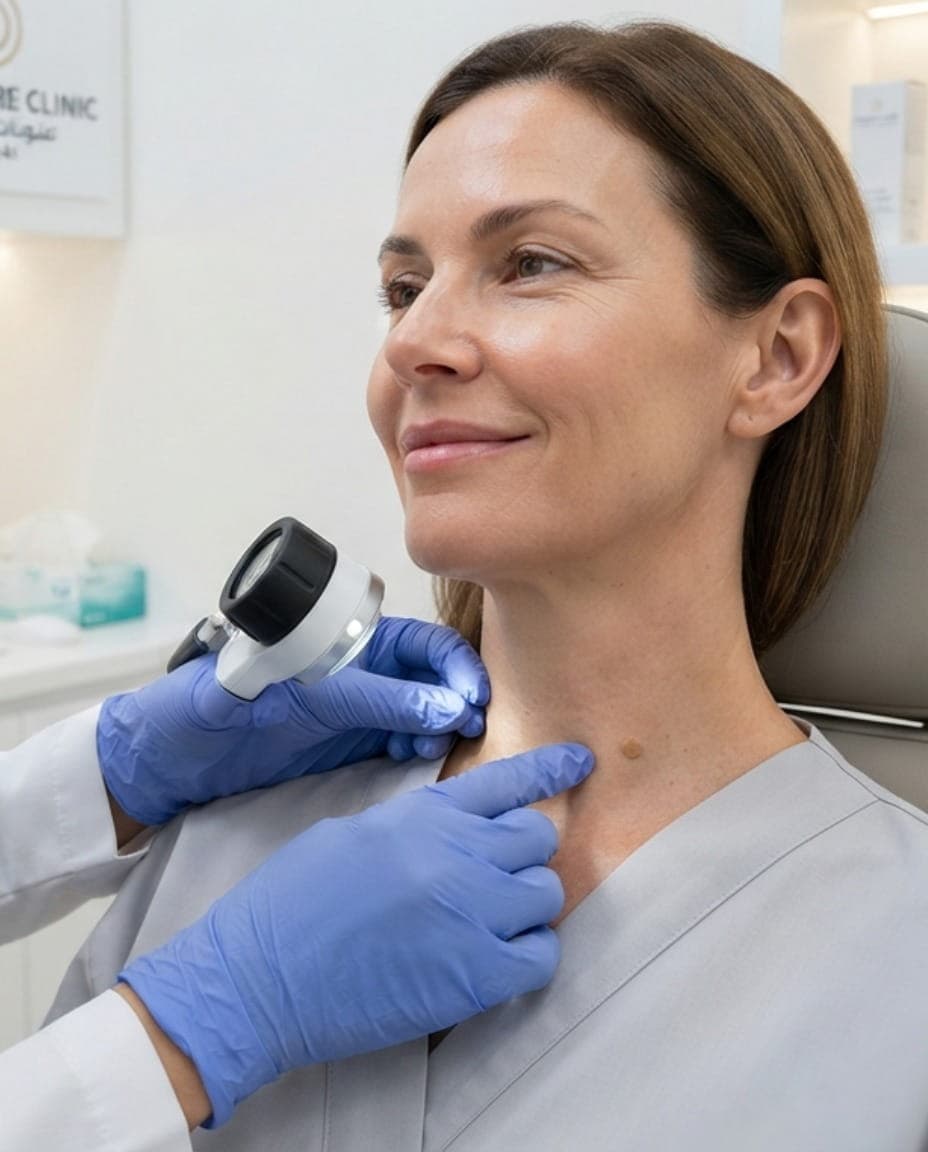
Is it consistent with a typical pedunculated skin tag?
Flesh-toned, or does it show unusual pigmentation?
Smooth, or irregular?
Has it stayed the same, or grown?
Narrow stalk, or broader base?
How long has it been there, and has it changed?
Bleeding, pain, itching?
Any recent evolution in appearance?
A clinician should assess a lesion whenever the diagnosis is uncertain, when it is changing, when it bleeds without an obvious cause like friction, when it becomes persistently painful, when it changes colour or shape, when it develops unusual features, or when it simply looks different from your other skin tags.
In some cases, if tissue is removed, a laboratory examination (histopathology) may be clinically indicated — this doesn't mean every skin tag requires biopsy, but it's a tool your clinician may use when a lesion's appearance raises any uncertainty. This step exists to protect you, not to complicate a straightforward removal.
Skin Tag Removal in Dubai: Which Treatment Is Right for You?
There's no single “best” method for every patient — the appropriate technique for skin tag removal in Dubai depends on a combination of factors specific to you and the lesion in question:
Skin Tag Removal Methods
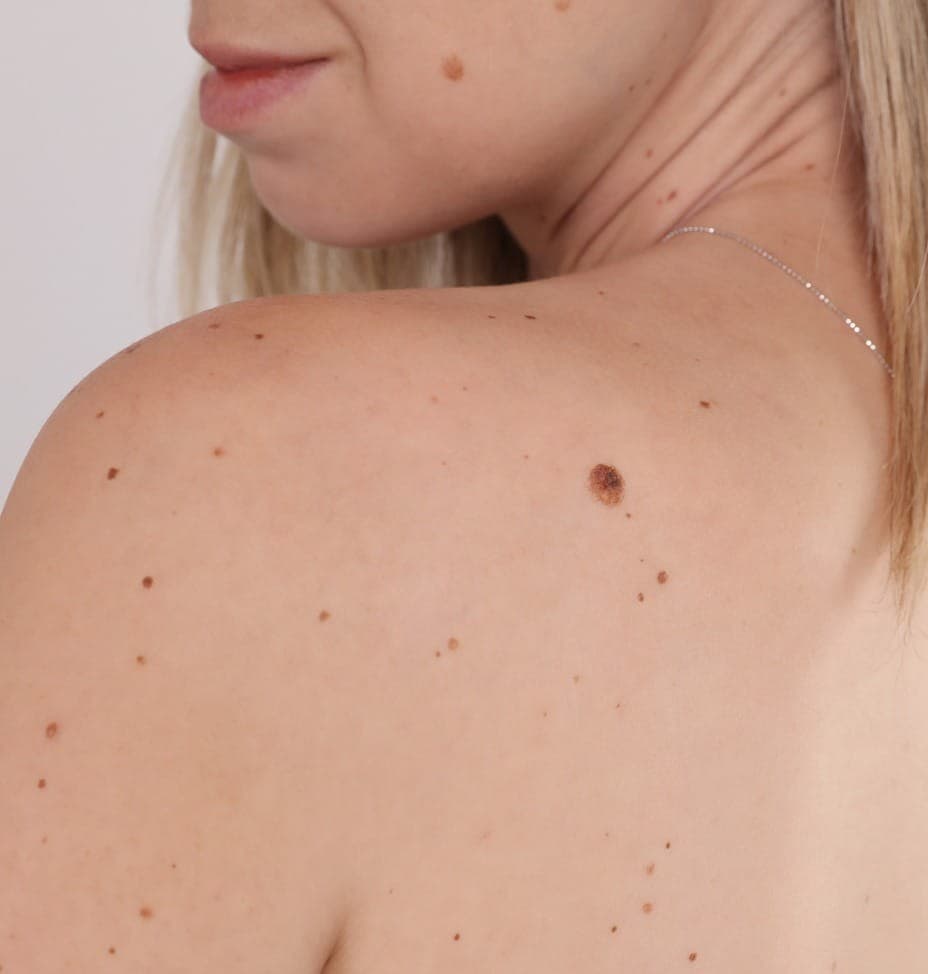
Electrocautery
Uses controlled electrical energy applied directly to the tissue. May be appropriate for selected lesions, and a local anaesthetic may be used depending on the specific procedure. Temporary crusting or redness at the treatment site is common afterward.
The appropriate technique should be selected after clinical examination rather than based solely on price or online comparisons.
How Skin Tags Are Assessed at RamaCare
We ask how long the growth has been present, whether it has changed, and whether there's been any irritation, bleeding, pain, or previous treatment attempts.
The clinician examines the lesion directly, assessing its size, shape, colour, and attachment.
We determine whether the growth appears consistent with a skin tag or whether further evaluation is needed.
Suitable removal options are explained, along with what to realistically expect.
We discuss the benefits, risks, alternatives, and recovery expectations before proceeding.
Treatment goes ahead only once it's clinically appropriate to do so.
What Happens During a Skin Tag Removal Appointment?
A typical visit for skin tag removal in Dubai at RamaCare follows a clear structure: consultation, skin examination, treatment selection, skin preparation, local anaesthetic if appropriate, the removal procedure itself, wound care, and finally aftercare instructions before you leave. The whole process is designed to be efficient and reassuring, without skipping the clinical steps that keep it safe.
Is Skin Tag Removal Painful?
Comfort levels vary from patient to patient and depend on the removal method used, the size and location of the lesion, and individual pain sensitivity. Local anaesthetic may be used for certain procedures to improve comfort. We won't tell you the procedure is “completely painless” — that's simply not a realistic claim for any removal technique — but most patients describe the sensation as brief and manageable, particularly with appropriate numbing where used.
Recovery and Aftercare
Recovery time varies depending on which method was used and the individual healing response. Temporary effects can include:
There isn't one universal healing timeline that applies to every patient or every method — your clinician will give you a realistic expectation based on your specific treatment.
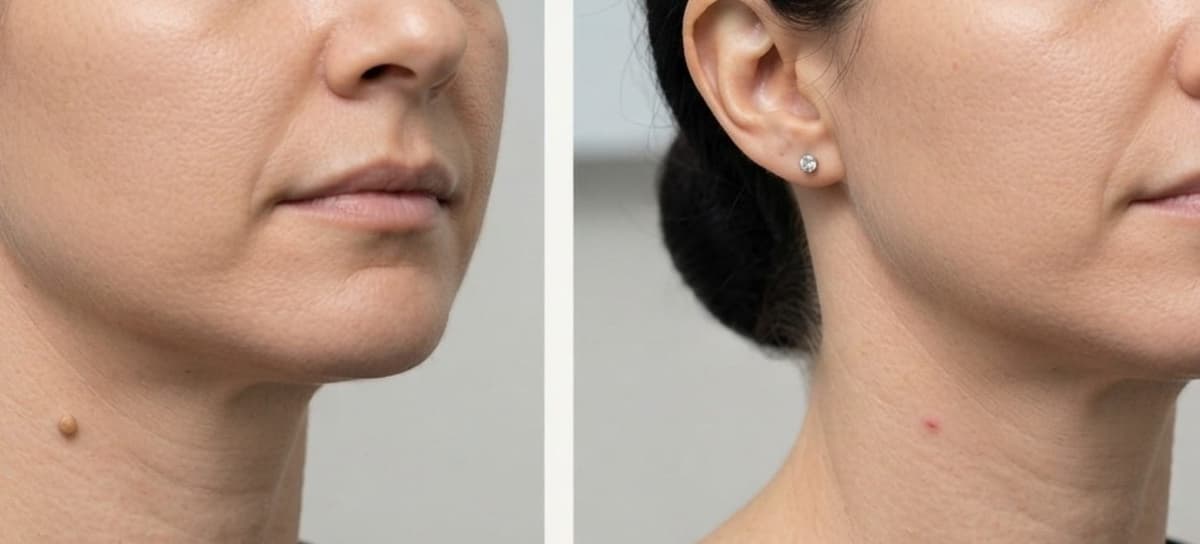
Skin Tag Removal Before and After
Before-and-after photographs can be a useful way to see how an individual lesion changed after treatment, but results vary between patients and between lesions. For photos to be genuinely comparable, they should ideally use similar lighting, the same angle, the same distance, no filters, and a consistent background. We won't promise that every patient achieves an identical outcome — healing and final appearance depend on your skin, the treatment method, and how the area is cared for afterward.
Skin Tag Removal Side Effects and Risks
As with any minor procedure, there are possible side effects to be aware of:
The likelihood and extent of these effects depend on the removal technique used, the lesion's location, your skin type, your individual healing response, and how well aftercare instructions are followed.
Can Skin Tags Grow Back After Removal?
A successfully removed individual skin tag does not typically regrow from the same tissue. However, that doesn't mean you're guaranteed to be tag-free for life — new skin tags can develop elsewhere on the body over time. Removing one lesion doesn't prevent future ones from forming, since the same contributing factors (like friction and individual tendency) remain in play. We can't promise permanent prevention, and any clinic that does should be viewed with caution.
Skin Tag Removal Cost in Dubai
We won't quote a fixed number here, because skin tag removal cost in Dubai genuinely depends on several variables:
Publicly listed prices across Dubai clinics can vary substantially depending on the procedure and provider, so we'd rather not present a generic market figure as though it were RamaCare's own fee. The most accurate way to understand your cost is to come in for an assessment, after which we can give you a personalised quotation based on your specific case.
Benefits of Professional Skin Tag Removal
Should You Remove a Skin Tag at Home?
We'd strongly advise against it, and we mean that calmly rather than as a scare tactic. Please avoid:
The risks of DIY removal include bleeding, infection, scarring, an incorrect assumption about what the growth actually is, and — perhaps most importantly — a delayed assessment of a lesion that might have needed a closer look in the first place. None of this is meant to alarm you; it's simply that a two-minute clinical examination is a much safer starting point than a home remedy.
When Should You See a Dermatologist?
Book a professional evaluation if a skin growth:
A changing or suspicious lesion should be assessed by a clinician — not removed for cosmetic reasons before anyone has confirmed what it actually is.
Why Choose RamaCare Polyclinic for Skin Tag Removal?
Every lesion is assessed before any removal is discussed, so you know what you're dealing with before deciding on treatment.
The removal method is selected according to the lesion's characteristics and your individual needs, rather than defaulting to a single technique for everyone.
Where clinically relevant, patients can access broader medical care within the same polyclinic setting.
We take the time to explain risks, aftercare, and realistic expectations, so there are no surprises after your appointment.
RamaCare Polyclinic is based in Jumeirah 1, Dubai, making skin tag removal Dubai appointments accessible for patients across the city.

Patient Journey
Frequently Asked Questions
What is a skin tag?
A skin tag, or acrochordon, is a small, soft, usually flesh-coloured growth of skin that often hangs from a thin stalk. They commonly form in areas of friction like the neck, underarms, and skin folds, and are generally benign.
Related Treatments & Care Guides
If you're unsure whether a growth is a skin tag or another type of lesion, consider starting with a dermatology consultation in Dubai before choosing a removal procedure.
Learn more about our broader approach to skin diseases treatment in Dubai.
If the growth in question is a mole rather than a skin tag, see our page on mole removal in Dubai.
Warts can sometimes be mistaken for skin tags — read about wart removal in Dubai for comparison.
Interested in other non-surgical options? Explore laser skin treatment in Dubai.
For broader cosmetic skin goals, see skin rejuvenation in Dubai.
Curious about aesthetic dermatology more generally? Visit our aesthetic dermatology Dubai page.
Return to the RamaCare Polyclinic homepage to explore our full range of services.

If you have a skin tag — or a growth you're not entirely sure about — the safest first step is a proper assessment, not a guess. Our clinicians can examine the lesion, confirm what it is, and talk you through appropriate removal options if you'd like to proceed. Book a dermatology consultation with RamaCare Polyclinic, call us directly, or send a WhatsApp message to get started.
There's no pressure to treat anything you're not ready for — just clear, professional guidance so you can make an informed decision.
Skin tags are usually benign growths that develop where skin experiences repeated friction, and for many patients, removal is simply a matter of comfort or cosmetic preference rather than medical necessity. Several removal methods exist — electrocautery, cryotherapy, snip excision, and laser-based treatment — and the right one depends on the specific lesion, not a one-size-fits-all approach. What matters most is that clinical assessment comes before removal, since not every growth that looks like a skin tag actually is one. Attempting removal at home introduces risks that simply aren't worth taking. If you're considering skin tag removal in Dubai, the most reliable path forward starts with a proper consultation — book an assessment with RamaCare Polyclinic to discuss your options.

Content Reviewed by Dr. Sahar Zomorrodi
General Practitioner & Aesthetic Specialist
MD · DHA Licensed General Practitioner • 10+ Years Clinical Experience