
Ayurvedic Knee Pain & Arthritis Treatment in Dubai, Jumeirah 1
Knee pain has a way of shaping your day: the extra thought before the stairs, the stiff first steps after a long meeting, the plans you quietly drop. If you are exploring Ayurvedic knee pain treatment, this page explains what it involves in plain terms. Traditionally, it starts with a conversation and may include warm medicated oil held over the knee (Janu Basti), herbal pouch therapy (Kizhi) or oil massage (Abhyanga), alongside advice on diet and routine. At RamaCare Polyclinic in Jumeirah 1, you can ask whether any of these might suit your knee.
Knee pain has many possible causes, from age-related osteoarthritis to injury or an inflammatory condition. A therapy that is reasonable for one cause can be unsuitable for another, so assessment comes first. Ayurvedic therapies are offered as complementary care. They are not a cure for arthritis, they do not replace medical assessment or prescribed treatment, and results vary from person to person.

Dr. Shamna Keloth Meethal (BAMS)
Ayurveda Doctor • 11+ Years Experience • DHA Licensed
Urgent Medical Attention Notice
If your knee is hot, red or very swollen, if you have a fever with joint pain, or if you cannot put weight on your leg after an injury, get medical assessment first. The signs are listed below.
What Is Ayurvedic Knee Pain Treatment?
Traditional Concepts & Individualized Guidance
Ayurveda is a traditional system of medicine that developed in India. It describes health through ideas such as the three doshas (Vata, Pitta and Kapha) and looks at how diet, digestion, sleep and daily routine affect the body. In this framework, joint stiffness and pain are often associated with Vata, linked with movement and dryness. Treatment therefore tends to focus on warmth, oils and routine guidance, adapted to the individual.
When treatment options are considered, the cause of the pain (if known), its severity and duration, and its effect on stairs, walking, sitting on the floor, work or exercise all matter. So do other health conditions and the medicines you take.
Evidence Status in Plain Language
These are traditional concepts, not biomedical diagnoses, and they are not proven mechanisms. Research on Ayurvedic therapies for knee problems is limited, and the US National Center for Complementary and Integrative Health notes that scientific evidence for Ayurveda is limited for many conditions. Many people find warm, unhurried treatment comforting. That experience is real, but it is not evidence that a therapy changes the underlying condition.
Why Knee Discomfort Comes Up So Often in Daily Life
Many adults in Dubai spend long hours at a desk or behind the wheel, then climb stairs, walk through malls, play padel or run at the weekend. Sitting for a long time can leave the knees stiff when you stand up, and a sudden jump in activity can irritate them. None of this means something is wrong, and none of it can be diagnosed from a distance.
But if the discomfort keeps returning, or starts to limit things you enjoy, it is reasonable to have it looked at rather than waiting for it to settle. That is the point where an assessment, and a conversation about your options, becomes useful.
Common Causes of Knee Pain and Joint Discomfort
Knee pain is a symptom, not a diagnosis. Common contributors include:
Osteoarthritis and age-related joint changes
gradual changes in the joint, often with pain on stairs or long walks and stiffness after rest.
Stiffness and discomfort
after sitting for long periods or first thing in the morning.
Overuse or activity-related strain
a sudden rise in walking, running, cycling or kneeling.
Injury
a twist, fall or sports injury affecting ligaments or cartilage, often with swelling.
Inflammatory joint conditions
such as rheumatoid arthritis or gout, which can cause a hot, swollen joint.
Reduced mobility, muscle weakness or extra load on the knees.
These conditions are not interchangeable and need different assessment and management. Symptoms alone cannot tell you which one you have.
Understanding Arthritis and Osteoarthritis
“Arthritis” is a broad term for joint inflammation or joint disease. It covers many conditions, including osteoarthritis, rheumatoid arthritis and gout.
Osteoarthritis involves changes in the joint over time, including breakdown of the protective cartilage at the ends of the bones. The knees, hips and small joints of the hands are most often affected. Common symptoms are pain, stiffness (especially after rest), difficulty moving the joint, and sometimes swelling, tenderness or a grating sensation. Severity varies widely and symptoms can come and go. The NHS describes osteoarthritis as a long-term condition that cannot be cured, with treatments available to reduce symptoms.
Inflammatory types such as rheumatoid arthritis involve the immune system and need medical diagnosis. Persistent joint symptoms are worth having assessed by a doctor.

Traditional Ayurvedic Therapies That May Be Considered for Knee Discomfort
The descriptions below explain traditional therapies for education. Procedures differ between practitioners, and suitability depends on your assessment. Availability at RamaCare is covered further down.
Janu Basti
Janu means knee. In this therapy, basti refers to keeping oil in one place. A ring of dough or paste is placed around the knee to form a small reservoir. Warm medicated oil chosen by the practitioner is poured in and kept warm for a period, then removed and the skin wiped clean.
Traditionally it is used for knee stiffness and discomfort, in line with Ayurvedic ideas about Vata. Warmth and oil can feel soothing. There is no good evidence that Janu Basti repairs cartilage, reverses joint damage or gives lasting pain relief, and no result can be promised.
Suitability & Clinical Boundaries
Suitability depends on your condition, skin health, sensitivity to heat (or reduced skin sensation, which can raise burn risk), allergies to oils or herbs, and whether the knee is swollen or recently injured. Janu Basti is applied externally and is a different procedure from Basti therapy, the internal medicated enema used in Panchakarma.

Abhyanga
Abhyanga is a traditional Ayurvedic oil massage using warm medicated oils selected for the person. It is usually a regional or whole-body massage rather than a treatment aimed at the knee joint itself. People often seek it for muscle tension and relaxation. It is not a medical diagnosis and it does not replace evidence-based rehabilitation, such as the exercise-based physiotherapy commonly recommended for knee osteoarthritis.
Practical points:
tell the therapist about skin sensitivity, oil allergies, swelling or recent injury. Firm pressure or kneading is not appropriate over a swollen, painful or recently injured knee, and technique should be adjusted or stopped if anything is uncomfortable.
Kizhi Therapy
Kizhi is a Malayalam word for a small pouch or bundle. Herbs, powders, leaves or cooked medicinal rice are tied in cloth, warmed (often with medicated oil) and applied to the body with rhythmic movements. Dry powder pouches (Podi Kizhi), fresh leaf pouches (Elakizhi) and cooked rice pouches (Njavarakizhi) are among the types described on RamaCare's Kizhi therapy page. Ingredients, temperature and technique are not standardised and vary between practitioners.
Pouch therapies are traditionally used for stiffness in muscles and joints, including the knees. Take extra care with heat sensitivity or reduced skin sensation, skin conditions or broken skin, allergies, and acute swelling or injury. A pouch should never be uncomfortably hot.
Other Relevant Ayurvedic Approaches
A consultation may also include diet and daily-routine guidance and, in some cases, herbal medicines. Herbal products vary in quality and can interact with prescription medicines, so give your doctor a full list of everything you take. RamaCare's Ayurveda department page also lists therapies such as Njavarakizhi, Pizhichil, Udwarthanam and Basti. Whether any of them is relevant to knee symptoms is a question for the Ayurveda doctor after assessment.
What Happens During an Ayurvedic Consultation?
RamaCare's Ayurveda page describes a first consultation of 45 to 60 minutes with its Ayurveda doctor, covering health history, current medicines and a written plan. For a knee concern, a consultation may include:
Symptom History
Your symptoms: where, since when, what helps or worsens them, and which daily activities are affected.
Medicines & Supplements
Medical history, current medicines, supplements and herbal products.
Imaging & Records Review
Previous injuries, diagnoses, scans and treatments. Bring X-ray or MRI reports and doctors' letters if you have them.
Suitability & Warning Signs
An assessment of whether an Ayurvedic therapy is suitable for you now, including skin, heat tolerance and any warning signs.
Options & Costs
An explanation of the options, precautions and cost.
Progress Monitoring
Follow-up review, where appropriate.
These are general possibilities. If the doctor thinks a medical check, imaging or physiotherapy would help first, colleagues are in the same building.
How to Prepare for Your Visit
A little preparation helps you get more from the appointment. It is worth bringing:
- A list of your medicines, supplements and any herbal products.
- Previous X-ray, MRI or blood test reports, and any doctors' letters.
- Notes on when the pain started, what makes it better or worse, and what you can no longer do comfortably.
- Loose clothing that lets the knee be examined easily.
You may also want to ask:
- Is an Ayurvedic therapy suitable for my knee right now, or should I see a doctor or physiotherapist first?
- Which therapy do you suggest, and what will a session involve?
- What precautions apply to me?
- How will we know whether it is helping, and when will you review the plan?
- What will it cost, and can I have that in writing?
Good questions are welcome. A practitioner who explains things clearly is usually a good sign.
Is Ayurvedic Knee Pain Treatment Suitable for Everyone?
No. Suitability depends on the cause of the pain, your medical history and the therapy being considered. Extra care, adjustment or postponement may be needed if you have:
Therapies Postponed or Adapted
- A newly injured knee.
- Significant or unexplained swelling.
- A hot or red joint, or fever with joint symptoms.
- Skin irritation, a rash, a wound or a skin infection near the knee.
- Reduced skin sensation or heat sensitivity, which raises the risk of burns (for example some people with diabetes or circulation problems).
- Allergies to oils, herbs or other ingredients.
- Pregnancy or breastfeeding, a heart condition, uncontrolled blood pressure, or recovery from surgery or a knee replacement. These need individual advice.
Medical assessment should come first if you have a hot, red or significantly swollen knee, especially with fever; severe pain after an injury; visible deformity; inability to bear weight; a knee that locks and will not straighten; or calf pain and swelling. Do not use heat or massage on an acute injury or unexplained swelling without clinical guidance. In an emergency in Dubai, call 998.
Ayurvedic Care Alongside Physiotherapy and Conventional Treatment
Managing knee pain often involves medical assessment, exercise prescribed for your knee, activity changes, weight management where relevant, medicines and, for some people, injections or surgery after specialist review. Ayurvedic therapies may be discussed as a complementary option for some people. They should not replace necessary medical care.
At RamaCare, the Ayurveda doctor, physiotherapist (Jeena Mathew, BPT, MPT) and GP work in the same clinic, and the knee pain page states that X-ray and ultrasound are available on site when needed. You can ask about a coordinated plan. RamaCare does not give knee injections or perform surgery, and refers patients when those are being considered. See knee pain treatment at RamaCare and Ayurveda vs physiotherapy for arthritis for the physiotherapy side.

Ayurvedic Knee Pain Treatment at RamaCare Polyclinic, Jumeirah 1
RamaCare Polyclinic is a DHA-licensed polyclinic (facility licence 2036418) on Al Dhiyafah Road in Jumeirah 1. Its Ayurveda department is led by Dr. Shamna Keloth Meethal (BAMS). Therapies are given by Kerala-trained therapists, with a male therapist for men and a female therapist for women.
For knee concerns, RamaCare lists Janu Basti, Kizhi therapy and Abhyanga (Kerala Ayurvedic massage), prescribed after consultation. Availability and suitability can change, so please confirm when you enquire that a particular therapy is currently available and appropriate for you.
The clinic states that you receive your plan and its cost in writing before therapy starts. The Ayurveda consultation is currently listed at AED 200. Insurance is on a reimbursement basis, with itemised invoices provided.
Facility & Appointment Essentials
Frequently Asked Questions About Ayurvedic Knee Pain Treatment
Talk to RamaCare About Your Knee
If knee pain or stiffness is making everyday life harder, you are welcome to get in touch with RamaCare Polyclinic in Jumeirah 1. You can describe what you are experiencing, ask which services are currently available, and find out whether a consultation makes sense for you. There is no pressure to book a therapy, and the team can tell you honestly if a medical check or physiotherapy should come first.
Meet Our DHA-Licensed Expertise
Highly qualified doctors with decades of combined experience, committed to your healing journey with expertise, compassion, and authentic care.

Dr. Shamna Keloth Meethal
BAMS (Ayurveda Practitioner)
General Ayurveda & Preventive Care
11+ Years Experience | DHA LicensedKey Expertise
- General Ayurveda: Prakriti evaluation & consultations
- Preventive Healthcare & Daily Routine guidance
- Ayurvedic Diet & Gut Health counseling
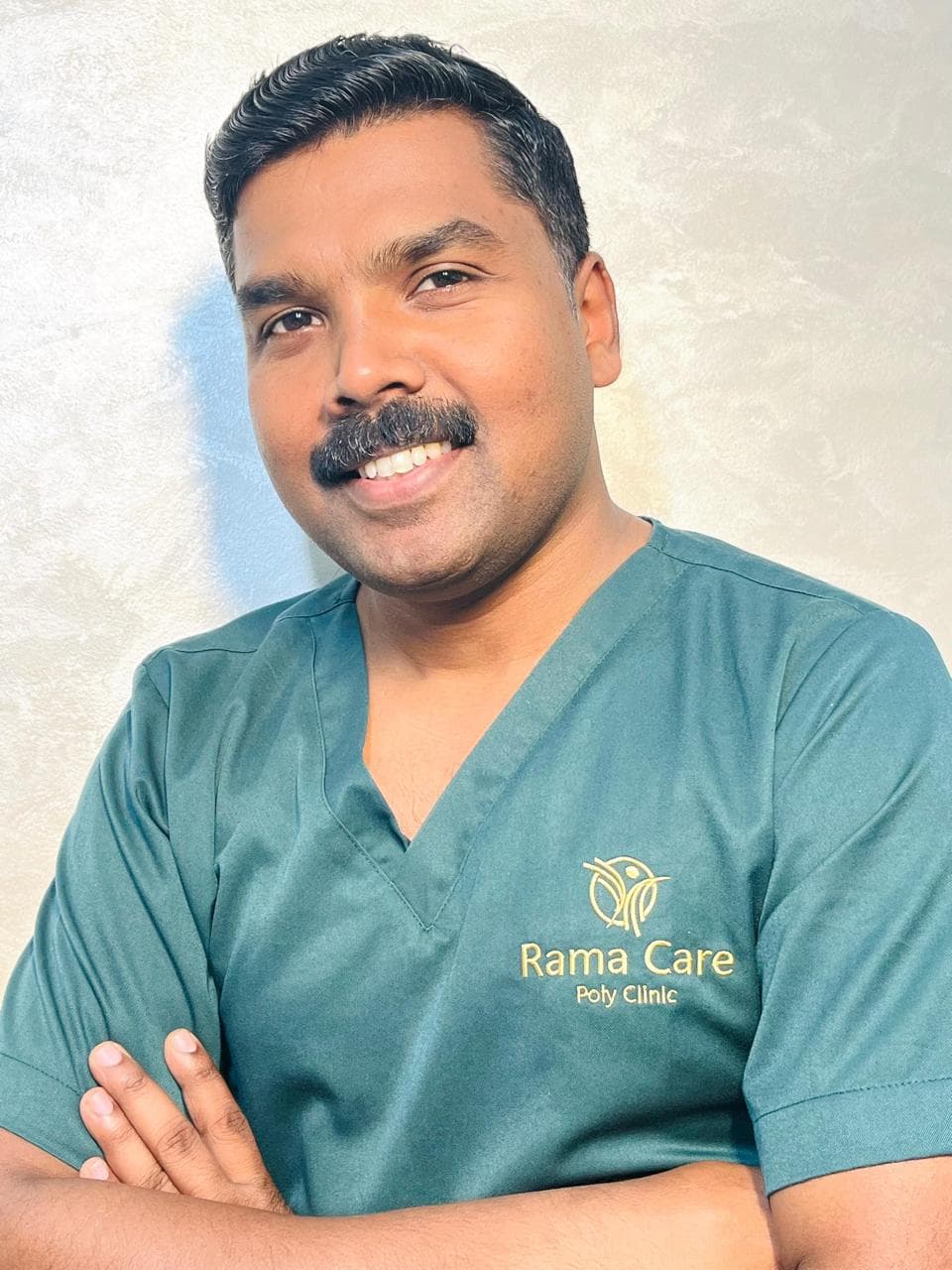
Syamkumar Sasidharan
Diploma in Ayurveda Panchakarma Therapy
Ayurveda Panchakarma Therapy & Holistic Wellness
17+ Years Experience | DHA LicensedKey Expertise
- Delivering traditional Ayurvedic treatments including Abhyanga, Panchakarma, and Shirodhara
- Detoxification therapies and personalized lifestyle consultations
- Holistic diagnosis and restoration of body imbalances

Mariya Thayyil Muhammed
DHA Licensed Ayurveda Therapist
Ayurveda Therapy & Holistic Wellness
14+ Years UAE ExperienceKey Expertise
- Traditional Ayurveda therapies
- Panchakarma support treatments
- Abhyanga and therapeutic massage

Jeena Mathew
BPT, MPT (Physiotherapy)
Musculoskeletal Physiotherapy
8+ Years ExperienceKey Expertise
- Back Pain & Sciatica: Manual therapy and strengthening
- Neck Pain: Joint mobility and posture advice
- Shoulder & Knee Pain: Rehabilitation

Content Reviewed by Dr. Shamna Keloth Meethal
Ayurveda & Holistic Health Specialist
BAMS · DHA Licensed Ayurveda Doctor • 11+ Years Clinical Experience
Book Your Consultation Today
Take the first step towards better health and wellness. Our DHA-licensed specialists are ready to help.
Get In Touch
Call Us
+971 04 286 2006
Chat with us instantly
query@ramacarepolyclinic.com
Clinic Address
12 Al Dhiyafah Rd - Jumeirah Terrace Building,
Ground Floor, Jumeirah 1 - Dubai
Clinic Hours
Request Appointment
DHA Licensed
Certified Healthcare Facility
DHA-Licensed Team
Doctors, dentists and therapists
Open 7 Days
10am to 10pm, walk-ins welcome
4.8/5 Rating
217 Google reviews
Ayurvedic Knee Care
AED 200 Initial Assessment