
Ayurvedic Summer Diet for Dubai: Cooling Foods for Pitta and the Heat
When Dubai temperatures pass 45°C, many people notice acidity, prickly heat, headaches, irritability and tiredness. Ayurveda calls summer Grishma, the season when Pitta (fire) rises and digestion weakens, and it has a classical seasonal routine for it, Grishma Ritucharya.
An Ayurvedic Diet for the Dubai Summer
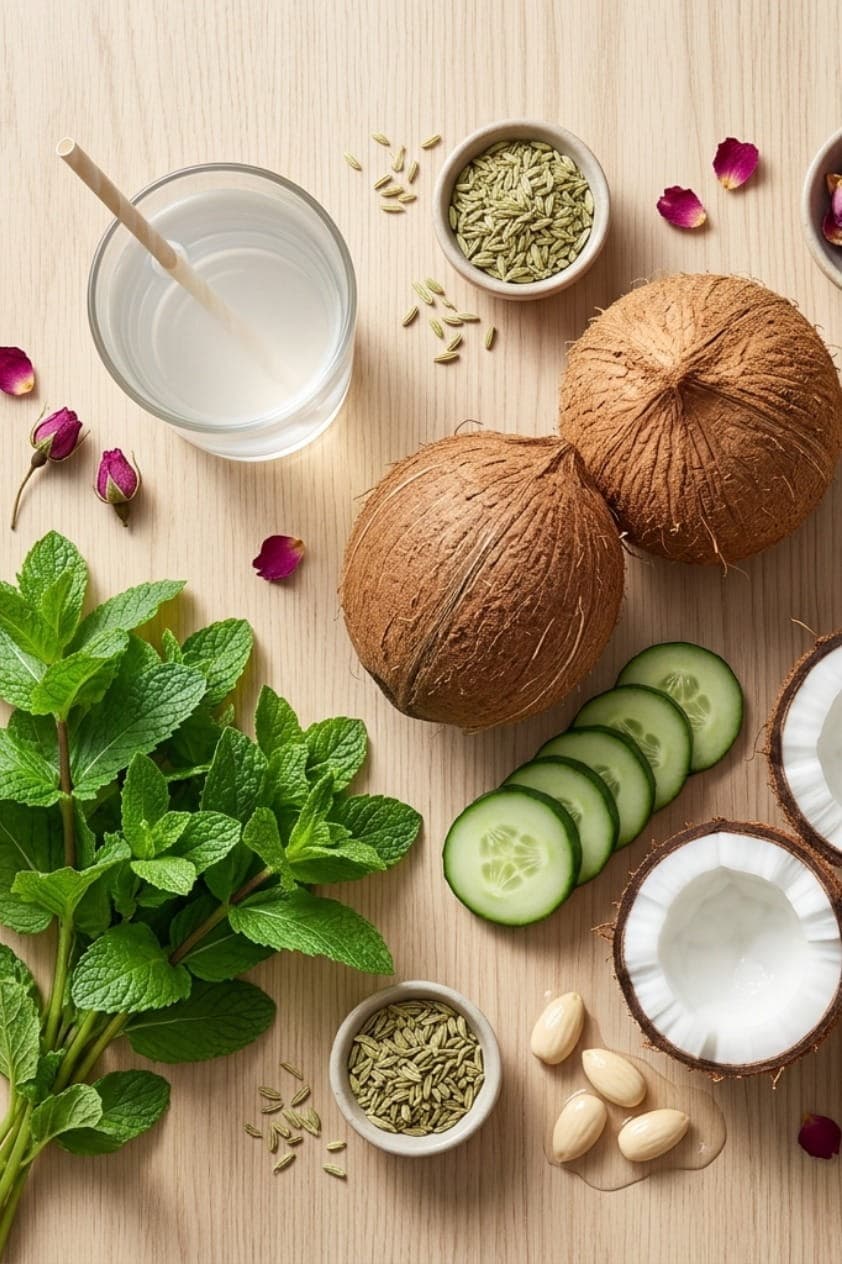
How Can I Reduce Body Heat in the Dubai Summer?
In short: Choose cooling foods with sweet, bitter and astringent tastes: cucumber, melons, coconut water, leafy greens, rice, mung dal and buttermilk. Use cooling spices such as fennel, coriander and mint. Cut back on chilli, pickles, vinegar, fried food, alcohol and excess coffee. Drink plenty of room-temperature water through the day (Ayurveda advises against ice-cold drinks with meals), and avoid the midday sun and hard exercise in the heat.
Why the Dubai Summer Affects Your Body
At RamaCare Polyclinic, we see a surge in "heat-stress" symptoms during the months of June through September. The Dubai environment creates a perfect storm for Pitta imbalance:
Intense Heat and Sun
From May to September, heat and strong sun raise Pitta in Ayurvedic terms, often felt as acidity, prickly heat, irritability and skin sensitivity.
Hot Outdoors, Cold Indoors
Moving between the heat and strong air-conditioning, and drinking iced drinks, can upset digestion; Ayurveda says digestive fire is already weak in summer.
Sweat, Fluid and Salt Loss
Heavy sweating in Dubai's humidity loses water and salts, causing tiredness, headaches and cramps if you do not drink enough.
Five Cooling Foods for the Dubai Summer
Traditional Ayurvedic summer foods, easy to find in Dubai:
Fresh Coconut Water
Naturally contains potassium and is a traditional summer drink in Ayurveda. Fresh is best. People with diabetes or kidney disease should check with their doctor first.
Watermelon and Muskmelon
Over 90% water. The sweet taste is traditionally used to balance Pitta. Eat them on their own, in moderate portions if you have diabetes.
Coriander and Mint
Cooling herbs in Ayurveda. Add fresh to salads and raita, or brew as a light tea.
Barley (Yava)
A traditional cooling grain. Barley water (boiled, strained and cooled to room temperature) is a classic summer drink.
Gulkand (Rose Petal Preserve)
A traditional cooling preparation, taken in small amounts (about a teaspoon). It is high in sugar, so avoid it if you have diabetes.
Cooling vs Heating Foods in Ayurveda
| Favour (cooling) | Cucumber, melons, coconut, leafy greens, zucchini, rice, barley, mung dal, milk, buttermilk, ghee in small amounts, sweet ripe fruits, fennel, coriander, mint, cardamom |
|---|---|
| Limit (heating) | Chilli and very spicy food, garlic and raw onion in large amounts, pickles, vinegar, tomato-heavy and sour dishes, fried and salty snacks, alcohol, excess coffee and energy drinks |
| Tastes | Favour sweet, bitter and astringent; reduce salty, sour and pungent, as the classical summer routine (Grishma Ritucharya) advises |
Three Ayurvedic Cooling Drinks
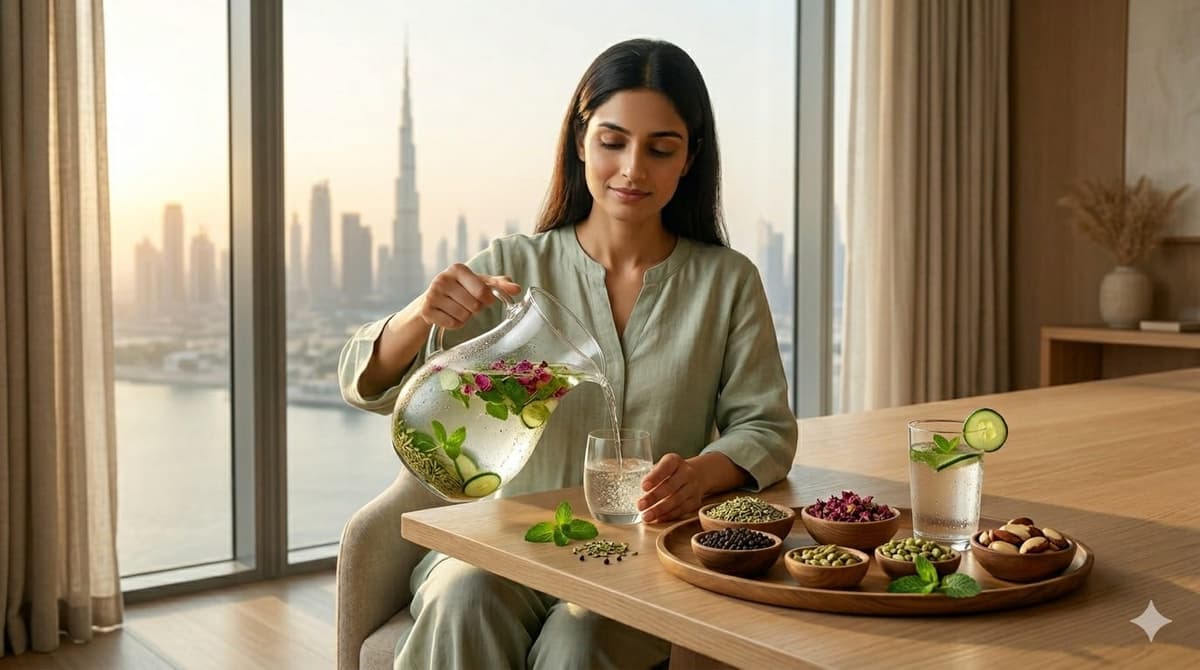
Fennel and Rose Water
Recipe: Soak 1 tsp fennel seeds and a few dried rose petals in 500 ml water overnight. Strain and sip through the day.
Benefit: Traditionally used to cool and settle digestion.
Ayurvedic Buttermilk (Takra)
Recipe: Blend 1 cup yoghurt with 2 cups water, a pinch of roasted cumin and fresh coriander. Drink at lunch.
Benefit: Ayurveda prefers thin buttermilk to thick yoghurt in summer; it is traditionally used for digestion.
Coriander Seed Water
Recipe: Boil 1 tsp coriander seeds in 2 cups water for 5 minutes, strain and drink at room temperature.
Benefit: A traditional cooling drink for Pitta.
Sample Ayurvedic Summer Day in Dubai
An example only. Your plan depends on your dosha and health.
| On waking | A glass of room-temperature water, or coriander seed water |
|---|---|
| Breakfast | Oats or poha with sweet fruit, or idli with coconut chutney |
| Mid-morning | Fresh coconut water or a few slices of melon |
| Lunch (main meal) | Rice, mung dal, a cooked green vegetable, cucumber salad and buttermilk |
| Afternoon (stay indoors) | Fennel and rose water; rest in the hottest hours |
| Dinner (early) | Light vegetable soup or kitchari |
| Exercise | Early morning walk or indoor yoga; avoid 11am–4pm outdoors |
Heat Exhaustion and Heatstroke: When to Get Help
Diet helps you cope with summer, but heat illness needs action. Based on NHS guidance:
Ayurvedic Summer Diet: Frequently Asked Questions
What is the Ayurvedic summer diet?
Which foods should I avoid in the Dubai summer?
Should I drink ice-cold water in summer?
Can I eat spicy food in the Dubai summer?
Is yoghurt good in summer?
Are salads good in summer?
Why do I feel irritable in the heat?
What are the signs of heat exhaustion?
When is heat an emergency?
Is coconut water safe if I have diabetes or kidney disease?
When should I exercise in the Dubai summer?
Which Ayurvedic therapies help in summer?
Where can I get an Ayurvedic summer diet plan near Jumeirah 1?
Your Summer Consultation in Jumeirah 1
| Doctor | Dr. Shamna Keloth Meethal, BAMS, DHA-licensed Ayurvedic doctor (11+ years) |
|---|---|
| Consultation | From AED 200, 45–60 minutes |
| Therapies | Takradhara, Shirodhara, Abhyanga, with same-gender therapists |
| Address | 12 Al Dhiyafah Road, Jumeirah Terrace Building, Ground Floor, Jumeirah 1, Dubai |
| Nearby | A few minutes from Satwa and Al Wasl; about 10 minutes from Jumeirah 2, City Walk and La Mer |
| Hours | Every day, 10am–10pm; evening slots avoid the midday heat |
Summer Care at RamaCare Polyclinic
A consultation with Dr. Shamna Keloth Meethal (BAMS), from AED 200, includes your dosha (Pitta) assessment and a summer diet and routine plan for Dubai.
Dosha and Pitta Assessment
Find out how much the heat is affecting your digestion, skin and sleep, in Ayurvedic terms.
Summer Diet and Drinks Plan
Which foods and drinks suit your body type in the heat, with cautions if you have diabetes or kidney problems.
Cooling Therapies
Takradhara, Shirodhara and coconut-oil Abhyanga, given by therapists of your own gender, if suitable.
Stay Comfortable Through the Dubai Summer
Book a summer consultation with Dr. Shamna in Jumeirah 1, including evening slots up to 10pm. For a full plan, see our Ayurvedic diet plan in Dubai.
Related Ayurvedic Guides

Content Reviewed by Dr. Shamna Keloth Meethal
Ayurveda & Holistic Health Specialist
BAMS · DHA Licensed Ayurveda Doctor • 11+ Years Clinical Experience