
Dry Needling in Jumeirah 1, Dubai for Muscle Pain & Trigger Points
Physiotherapy-Led Trigger Point Treatment for Muscle Tension and Restricted Movement
RamaCare Polyclinic offers dry needling at 12 Al Dhiyafah Road, Jumeirah 1, Dubai, near Al Satwa. Every session is done by our DHA-licensed physiotherapist, Jeena Mathew (BPT, MPT), after an assessment, and is combined with exercise and hands-on treatment. Open every day, 10am–10pm, with same-day appointments. Pay by card, cash or Tabby instalments; insurance is by reimbursement.
Most weeks I see some version of the same patient — a knot in the shoulder that’s been there for three months, a heating pad and two mattress changes already tried, and finally a question I hear a lot: “why hasn’t this just gone away on its own?” More often than not, the answer is a trigger point — a small, stubborn band of muscle that stays contracted long after whatever caused it has passed, and that rest by itself rarely undoes.
Dry needling is built for exactly that, and it’s one part of the broader physiotherapy work we do at RamaCare. A hair-fine, sterile needle goes directly into the tight muscle band to get it to let go. It’s not the whole answer on its own, and I’d rather tell you that now than after you’ve booked five sessions expecting a miracle — but for the right case, especially in a city where most of my patients are sitting at a desk or in traffic for the better part of the day, it’s often the one thing that finally moves the needle after weeks of stretching and heat packs going nowhere.
Before I pick up a needle, though, I want to understand how you actually move, not just where it hurts. A tight upper trap in someone with a long daily drive and a desk job tells a different story than the same tight trap in someone who overdid it on the padel court over the weekend — and the treatment should follow that story, not a fixed protocol.
Medical Disclaimer: Dry needling isn’t suitable for everyone, and it isn’t a substitute for medical diagnosis where one is needed. Treatment follows a clinical assessment, and how you respond will depend on your specific condition and how consistently you follow through on the rehab side of things.
Treatment Overview
What Is Dry Needling?
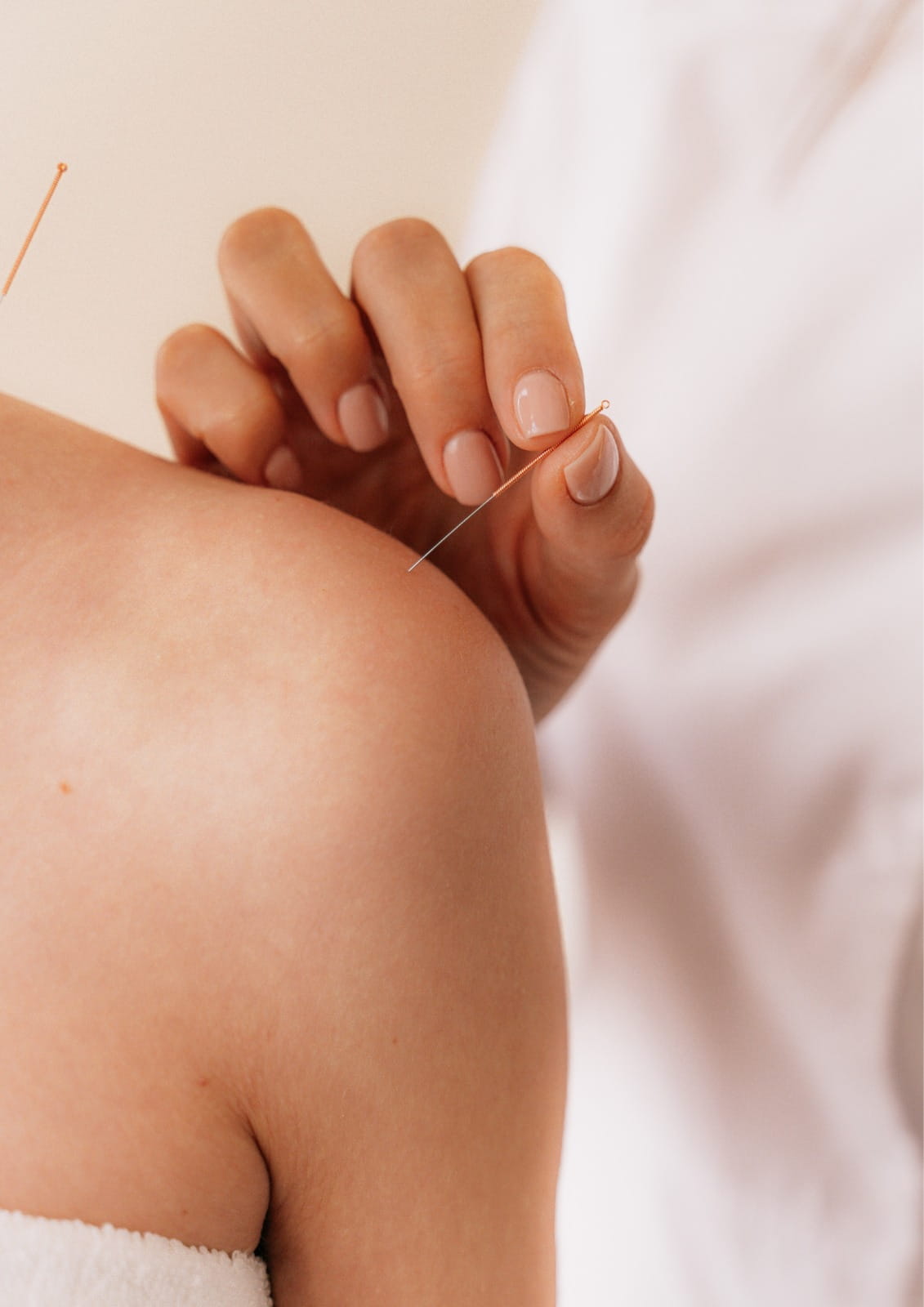
Dry needling is a physiotherapy technique used to address areas of muscle that are painful, tight, or sensitive. It involves inserting a very thin, sterile needle into targeted muscle tissue, often around myofascial trigger points.
A trigger point is a sensitive area within a muscle that may feel like a small, tight knot. It can develop alongside factors such as prolonged poor posture, repetitive movement, physical overload, stress, or previous injury. In some cases, pressing the area can reproduce pain that the patient recognizes as part of their usual symptoms.
The needle used for dry needling is similar in size to an acupuncture needle and is much thinner than a typical injection syringe. Unlike an injection, no medication is delivered through the needle. The needle is inserted into the targeted tissue based on the patient's symptoms, physical assessment, and the therapist's knowledge of musculoskeletal anatomy.
When the needle reaches a particularly sensitive area, the muscle may produce a brief local twitch response. Some patients feel very little during insertion, while others notice a short-lived ache, cramping sensation, or pressure. Your physiotherapist can adjust the technique according to your comfort level and the condition being treated.
Dry Needling vs. Acupuncture
Dry needling and acupuncture both use very thin needles, but they are generally based on different clinical frameworks.
Dry needling is primarily used within musculoskeletal and physiotherapy practice, with treatment directed toward specific muscles, painful areas, and neuromusculoskeletal structures identified during a physical assessment. Acupuncture is traditionally associated with Traditional Chinese Medicine and uses a different theoretical framework involving acupuncture points and meridians.
Although the techniques may look similar, the purpose, assessment process, and treatment approach can differ. Your physiotherapist will determine whether dry needling is appropriate based on your symptoms, medical history, and physical assessment.
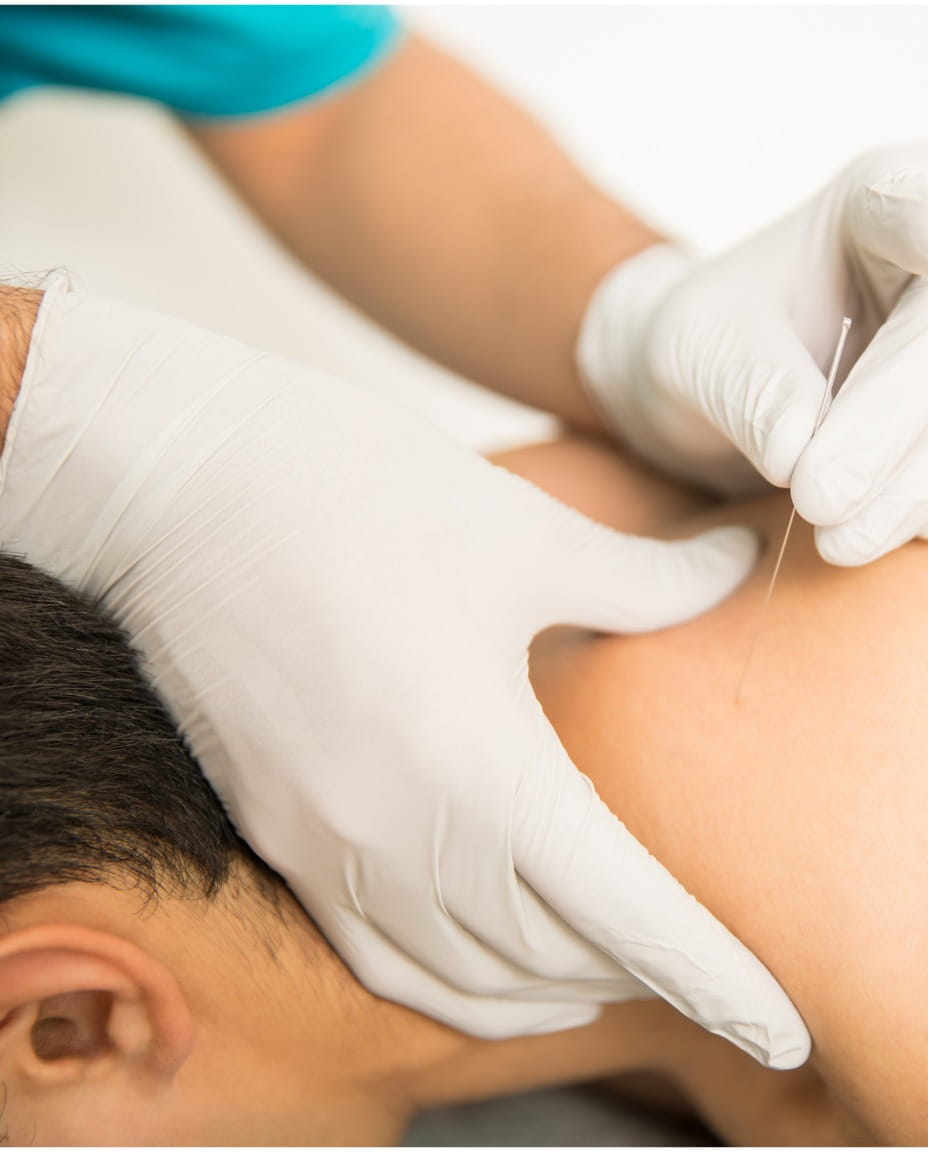
Fine filament needles targeting exact musculoskeletal trigger points
What You’ll Feel Afterward
Expect some soreness for a day, maybe two — similar to how a muscle feels after a hard leg day at the gym. Occasionally there’s a small bruise if the needle passes near a blood vessel, which looks worse than it is. I tell most patients to treat that evening gently: normal activity is fine, but skip the heavy training session you had planned.
Does It Actually Fix Anything?
Depends what’s causing the pain. If it’s genuinely muscular — tight, overworked, guarding after an injury — needling tends to help, especially combined with the exercise side of rehab. If the pain is coming from a disc, a nerve, or a joint that needs a different kind of attention, needling the surrounding muscle might take the edge off but won’t solve the underlying issue, and I’ll say so rather than keep booking sessions that aren’t going anywhere.
What We Treat With It
Most of what walks through our door falls into a fairly predictable list: neck pain and stiffness, lower back tightness, shoulder pain (frozen shoulder included), sports strains, stubborn trigger points and spasms, tennis and golfer’s elbow, knee pain that’s tied to the surrounding muscles rather than the joint itself, sciatica-type leg pain where the piriformis is involved, tension headaches, postural pain from years at a desk, and stiffness left behind after surgery or a bigger injury.
Not everything on that list responds the same way, and not every patient with, say, “knee pain” is actually dealing with a muscular issue — some are, some aren’t, and figuring out which is half the point of the first appointment.
Back Pain, Specifically
A good chunk of the back pain I see in clinic has a straightforward story: hours at a desk, a drive that’s longer than it should be, a training programme with a bit too much lower-back loading. When the muscles around the spine are the main issue, dry needling gets paired with trunk strengthening and mobility work.
Neck and Shoulders — the Everyone-in-Dubai-Office-Life Pattern
If you spend your day between a laptop and a car seat, your upper traps and levator scapulae are probably the tightest muscles in your body, and you probably don’t need me to tell you that. This is the single most common reason people come in asking about dry needling.
It usually works best alongside some blunt conversation about your desk chair, monitor height, and how many hours you’re actually sitting still — the kind of thing we cover in more detail in our neck pain treatment programme — because a released muscle that goes straight back into the same posture tends to tighten right back up within a couple of weeks.
Sports and Training Injuries
For the more active crowd — and Dubai has plenty of them, between the beach runs, padel courts, and CrossFit boxes — dry needling usually slots into a broader return-to-sport plan rather than standing alone:
- Work out what actually happened and how the injury is affecting movement
- Find the specific muscles that have tightened up around it
- Needle where it’s genuinely indicated
- Rebuild mobility
- Load the muscle back up progressively
- Retrain the actual movement the sport demands
- Get back to full training gradually, not all at once
Who Tends to Benefit
There’s no single profile, but a few patterns show up again and again in clinic. Desk-based professionals with permanent tightness across the shoulders. Gym-goers who’ve hit a plateau because a tight muscle is quietly limiting their range of motion. People a few weeks post-surgery whose muscles are still guarding the area out of habit. Tradespeople and anyone doing repetitive physical work — the strain adds up the same way whether it’s a laptop or a toolbox. And a fair number of people who are already doing physiotherapy exercises and just aren’t progressing, because there’s a muscular knot in the way that stretching alone hasn’t touched.
If none of that sounds like you, that’s fine too — dry needling isn’t the right tool for every kind of muscle pain, and part of the first visit is figuring out whether it’s actually relevant to your case.
Session Length and How Many You’ll Need
The first appointment runs 30 to 45 minutes, mostly assessment. The needling itself is usually 20 to 30 minutes once we know what we’re treating. How many total sessions depends heavily on how long the problem has been building — a trigger point that’s three weeks old behaves very differently from one that’s been there for two years. Most patients come in once or twice a week during active treatment.
At a Glance
Muscle Problems We See Constantly
Chronic tightness in the neck and shoulders is the one I see most — it quietly eats into sleep and focus long before anyone books an appointment for it. Right behind that is restricted movement, where a trigger point locks a muscle down enough that reaching overhead or bending to tie a shoe starts to feel effortful in a way it never used to.
Post-injury guarding is its own category. The body tightens protectively around an injured area, which is useful for about two weeks and then starts actively slowing recovery down. Athletes bring a slightly different version of the same problem — tightness that’s built up from repetitive training and hasn’t been addressed, usually showing up as a dip in performance before it becomes an actual injury.
Referred pain catches people off guard the most. A trigger point in the neck causing a headache, or a tight spot in the shoulder sending an ache down the arm — patients are often convinced something is wrong with the area that actually hurts, when the real issue is somewhere else entirely.
And then there’s the slow-burn stuff: years of desk posture creating imbalances that load the spine unevenly, and stress that settles into the jaw, neck, and upper back and just stays there.
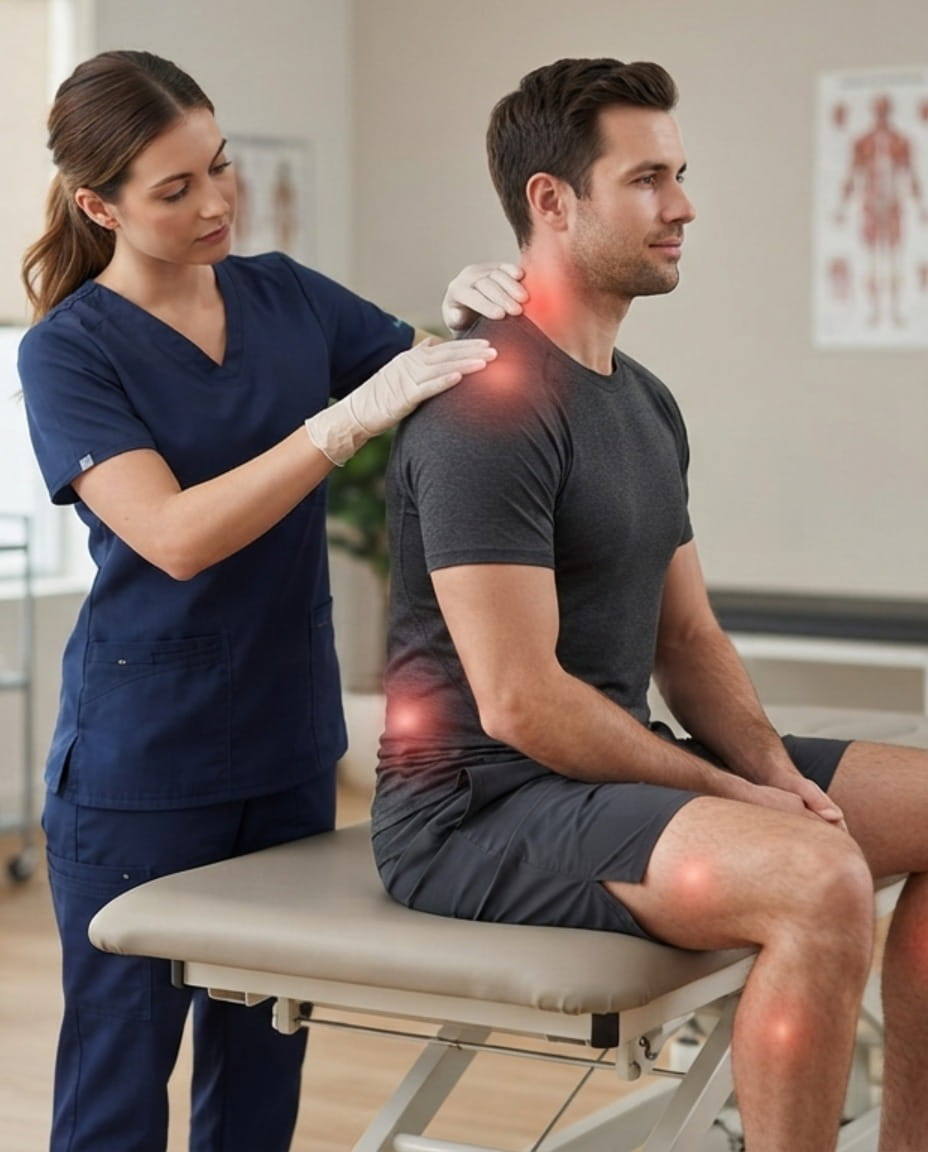
Most patients attempt multiple massage sessions or heat wraps before seeking needling. Trigger points require deep mechanical release, not superficial warmth.
What Happens, Step by Step

Physiotherapist performing dry needling on a patient’s shoulder at RamaCare Polyclinic
The Assessment
The assessment comes first. History, current symptoms, how you move, what’s tight, what’s weak. This is what tells me whether needling is even the right call, and if so, exactly which muscles need it — not just “where does it hurt.”
The Needling
Then the needling. Fine, sterile needles into the specific trigger points we’ve identified. Twenty to thirty minutes, generally. Expect a twitch, maybe some soreness for a day after.
The Rehab Work
Then the part patients underestimate — the rehab work. Stretches, strengthening, mobility drills, sometimes a fairly direct conversation about ergonomics or training load. Needling releases the muscle; this part is what stops it from tightening straight back up.
Check In
Then we check in. Follow-up visits track whether pain, movement, and strength are actually improving, and the plan gets adjusted based on that — not just repeated on autopilot.
Safety, Honestly
Honest Expectations
Dry needling is low-risk when it’s done properly, by someone trained to do it — but “low-risk” isn’t “no-risk,” and I’d rather say that plainly than pretend otherwise. Expect the possibility of mild soreness, occasional minor bruising, brief tenderness. Nobody gets needled at RamaCare without an assessment first confirming it’s actually appropriate.
Contraindications
A few things change the plan, or rule it out entirely: bleeding or clotting disorders, blood-thinning medication, an active infection near the treatment site, broken skin or a wound at the exact spot, certain uncontrolled medical conditions, pregnancy depending on the area involved, or a strong needle phobia that makes the treatment counterproductive. That’s not an exhaustive list — it’s exactly why I ask about your full medical history before we start, not after.

Rigorous hygiene and single-patient safety screening protocols
Afterward
Afterward: normal activity is fine, hydrate normally, do the exercises you’re given, and if the area’s sore, skip the heavy gym session for a day rather than pushing through it. Soreness doesn’t mean the treatment failed — it usually means the muscle actually responded.
What Patients Tell Us
I don’t quote percentages, because every case is different. What patients most often tell us, when the problem really is muscular, is that tight spots release, movement feels easier and spasms settle, especially when needling is combined with exercise: most people notice faster relief from the specific pain they came in with, a good majority feel trigger points release properly rather than just going quiet temporarily, and flexibility improvements show up often enough that we build stretching into almost every plan. Chronic neck, back, and shoulder pain responds particularly well when it’s genuinely muscular in origin. Fewer spasms, less stiffness, and a general preference among patients for something that doesn’t involve medication come up constantly in conversation.
None of that is a promise for your specific case — it’s what tends to happen when the underlying issue matches what dry needling is actually designed to treat.
Dry Needling or the Usual Options?
Painkillers, massage, heat, rest — none of these are wrong, and for plenty of muscle pain, they’re genuinely enough. Dry needling earns its place specifically when there’s a persistent trigger point that hasn’t responded to the simpler stuff. Quite often, the right answer isn’t “instead of” but “alongside.”
| Aspect | Dry Needling | The Usual Approach |
|---|---|---|
| Targets | The specific trigger point directly | General symptoms |
| Method | Needle into the muscle tissue | Medication, massage, rest, heat |
| Best for | Persistent, localised muscular tightness | Milder or more generalised discomfort |
| Combines with physio | Almost always | Sometimes |
| Downtime | Minimal | Minimal |
| Possible side effects | Brief soreness, occasional bruising | Depends on the treatment |
Why We Pair It With Physiotherapy Rather Than Use It Alone
Loosening a muscle doesn’t fix the posture or the movement habit that made it tight in the first place — that part still needs actual work. Combining the two tends to get closer to the root cause, rebuild how the muscle activates, restore mobility around the joint, and meaningfully cut down how often the same problem comes back.

Trigger Point Injections or Dry Needling?
A lot of people search for trigger point injections, so it’s worth being clear. A trigger point injection uses a syringe to put medicine, usually a local anaesthetic, into a tight muscle knot, and it’s given by a doctor. Dry needling targets the same knots with a much thinner needle and no medicine at all.
RamaCare does not give trigger point injections. For muscular knots, dry needling combined with exercise is often enough. If I think an injection would suit you better, I’ll tell you and we’ll refer you.
Quick Facts: Dry Needling at RamaCare
- Where: Ground floor, Jumeirah Terrace Building, 12 Al Dhiyafah Road, Jumeirah 1, Dubai (near Al Satwa)
- Who: Jeena Mathew, DHA-licensed physiotherapist (BPT, MPT, 8+ years)
- Needles: sterile, single-use, no medicine
- Session: assessment first; needling about 20–30 minutes
- Also available: dry needling and ultrasound combo package
- Payment: cash, cards or Tabby instalments; insurance by reimbursement
- Open every day 10am–10pm · 04 286 2006 · WhatsApp 056 659 7878
العلاج بالإبر الجافة في جميرا 1، دبي، على يد أخصائية علاج طبيعي مرخصة من هيئة الصحة بدبي، مفتوح يومياً حتى 10 مساءً.
Cost
Pricing depends on the assessment, how many areas need treating, and whether it’s part of a longer rehab programme or our dry needling and ultrasound combo package. I’d rather quote you accurately after seeing what’s actually going on than throw out a number that doesn’t match your situation.
Call +971 4 286 2006 or WhatsApp +971 56 659 7878 and we’ll talk through it. If you’re comparing clinics, it’s worth asking directly whether their quote includes the assessment and follow-up guidance, or just the fifteen minutes of needling — that’s usually where the real difference in value sits.
Comparing Clinics Checklist
- Includes clinical musculoskeletal assessment
- Administered by university-trained, DHA-licensed physiotherapist
- Integrates post-needling mobility and exercise drills
- Weekly home exercise plan to prevent knot recurrence
Payment Options
- Cash, credit cards, and debit cards are all accepted
- Flexible payment plans available, including 0% interest instalments through Tabby
- Payment made at the time of your visit
Insurance & Reimbursement
- Reimbursement only — you pay at the clinic and claim from your insurer; we check your coverage and request prior approval if needed
- Itemised DHA-compliant medical invoice provided on the day of treatment
- Detailed clinical notes and documentation assistance for smooth reimbursement
Why Patients Keep Coming Back to RamaCare for This
We don’t skip the assessment, even when a patient is fairly sure they already know what’s wrong. Treatment gets built around your actual pattern of tightness rather than a standard protocol, and needling gets combined with exercise and manual therapy when that’s what the case calls for — which, honestly, is most of the time. Everything’s delivered by DHA-licensed physiotherapists, and you leave with a plan for the week, not just a sore muscle and a callback in seven days. We’re on Al Dhiyafah Road in Jumeirah 1, near Al Satwa, open every day until 10pm.

RamaCare Polyclinic — Jumeirah Terrace Building, Ground Floor
Is This Worth Looking Into for You?
If you’ve had the same tight spot in your neck for months, or your lower back tightens up every time you sit for more than an hour, or a muscle injury from sport just won’t fully settle — that’s usually the profile of someone who benefits from this. Tension headaches that trace back to the neck fit here too, as does general muscle pain that’s started interfering with work or exercise in a way it didn’t used to.
Ignoring it rarely makes it go away on its own. It usually just gets more entrenched, drags your posture and movement down with it over time, and raises the odds of a bigger injury eventually. Catching it early generally means less treatment overall, not more — which is the opposite of what most people assume.

What Patients Say About Their Visit
Patients share their experience of care at our Jumeirah 1 clinic, with their consent. Individual results vary.


Average Rating
Google Reviews
Patient Reviews
On Google
Departments
Under one roof
Days a week
Open 10am–10pm
Our Physiotherapist

Jeena Mathew — BPT, MPT (Physiotherapy)
DHA Licensed Physiotherapist | Musculoskeletal Physiotherapy | 8+ Years Experience
Jeena has spent most of her career on musculoskeletal cases specifically — the kind of work where the job is figuring out exactly why a muscle or joint isn’t cooperating, not just treating whatever hurts today. Her focus areas:
- •Back pain — manual therapy combined with targeted strengthening
- •Neck pain — joint mobility work and posture advice that actually accounts for your real daily routine
- •Shoulder and knee rehab — progressive, structured recovery plans
Speaks: English
Clinically Reviewed
Reviewed by Jeena Mathew — Musculoskeletal Physiotherapy Specialist, BPT, MPT (Physiotherapy), DHA Licensed Physiotherapist, 8+ Years Clinical Experience.
Dry Needling in Jumeirah 1: Common Questions
Practical answers about dry needling, trigger points, cost and physiotherapy at RamaCare Polyclinic, Jumeirah 1, Dubai.
What is dry needling, really?
Does dry needling hurt?
Isn’t dry needling the same as acupuncture?
What can dry needling actually help with?
Can dry needling help with back pain?
Can dry needling help with neck pain and muscle tightness?
Is dry needling useful for sports injuries?
How many dry needling sessions will I need?
How long does a dry needling session take?
Is dry needling safe?
What side effects can I expect after dry needling?
Will dry needling improve my flexibility?
Who may not be suitable for dry needling?
Where can I get dry needling in Jumeirah 1, Dubai?
How soon will I feel a difference after dry needling?
Can dry needling replace physiotherapy exercises?
Is dry needling a permanent fix?
How much does dry needling cost in Dubai?
Do you offer trigger point injections?
What is the difference between dry needling and trigger point injections?
Do you offer a dry needling and ultrasound combo?
Can I pay for dry needling with Tabby?
Does insurance cover dry needling?
Can I have dry needling after work?
Who performs dry needling at RamaCare?
Other Physiotherapy Services We Offer
Book In
If a tight muscle has been running your week for longer than it should, it’s worth getting it actually looked at rather than waiting it out again. Our team can tell you fairly quickly during the first visit whether dry needling makes sense for your case.
Book your consultation at RamaCare Polyclinic, Jumeirah 1, Dubai. Call: +971 4 286 2006 | WhatsApp: +971 56 659 7878
Book Dry Needling in Jumeirah 1
Assessment first, then dry needling where it suits you. Open every day 10am–10pm. Tabby available.
Get In Touch
Call Us
+971 04 286 2006
Chat with us instantly
query@ramacarepolyclinic.com
Clinic Address
12 Al Dhiyafah Rd - Jumeirah Terrace Building,
Ground Floor, Jumeirah 1 - Dubai
Clinic Hours
Request Appointment
DHA Licensed
Facility 2036418
Single-Use
Sterile Needles
Tabby
Instalments Available
Open Daily
10am – 10pm