
Hair Thinning Treatment Dubai: Causes, Options & Results
If you've noticed more scalp visibility through your hair, a part line that seems to be spreading, or a ponytail that feels noticeably thinner than it used to, you're not imagining things — and you're not alone. Hair thinning is one of the most common concerns patients bring to hair and scalp consultations, and it can show up gradually, sometimes over months or years, long before it becomes obvious to anyone but you.
Some people notice it first in photographs, where overhead lighting reveals more scalp than expected. Others notice it while styling their hair, when a part that used to sit neatly suddenly looks wider. Some feel it when they gather their hair into a ponytail and realize it's not as thick as it once was. These are all common, valid signals — and they can stem from a wide range of underlying causes, from genetics and hormones to nutrition, stress, scalp health, or a combination of factors.
At RamaCare Polyclinic in Dubai, hair thinning is approached as a clinical question rather than a cosmetic inconvenience. That means starting with a proper assessment — understanding what is actually happening to your hair and scalp — before discussing what treatment options, if any, may be appropriate. This page is designed to walk you through hair thinning in detail: what it is, why it happens, how it's assessed, what treatments exist, and what realistic expectations look like.
What Is the Best Treatment for Thinning Hair?
There is no single “best” treatment for thinning hair that applies to everyone. The right approach depends on the underlying cause, how long the thinning has been occurring, its severity, the current condition of the hair follicles, your medical history, and your individual goals. A proper assessment is the only reliable way to determine which path is appropriate for you.
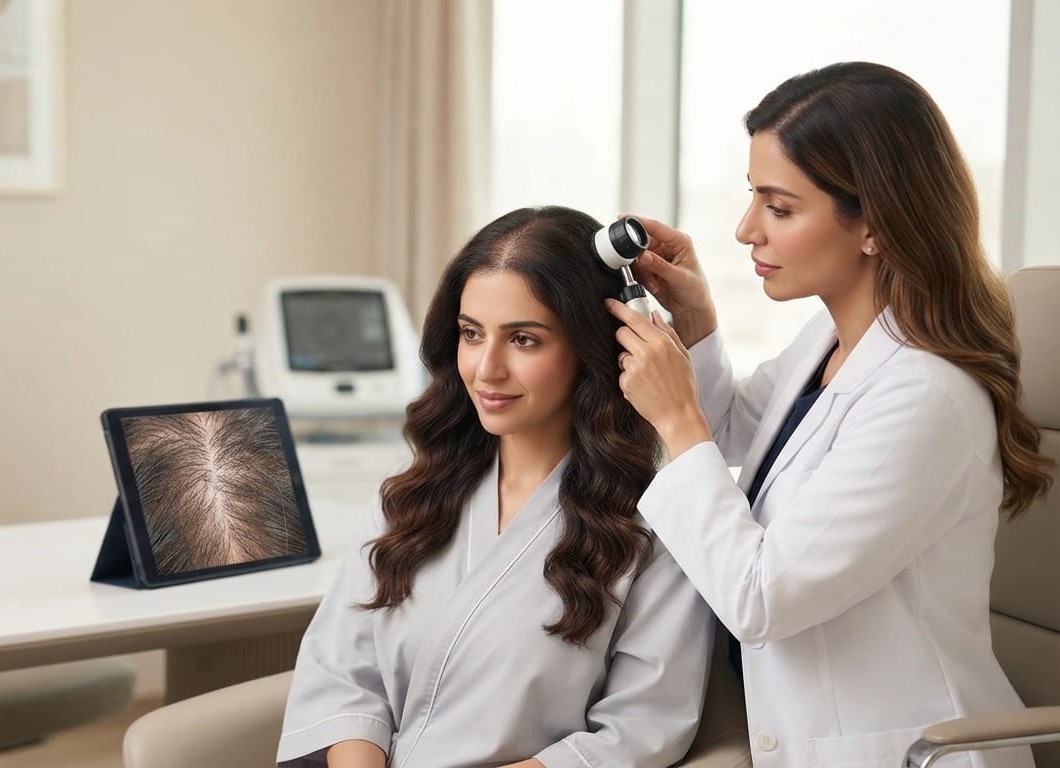
"A personalized consultation is the first step in understanding hair thinning."
What Is Hair Thinning?
Hair thinning refers to a gradual reduction in hair density and, often, in the diameter of individual hair strands. It's different from going bald in a specific spot — thinning is usually diffuse or pattern-based, meaning the overall volume of hair looks and feels reduced rather than disappearing entirely from one area.
A few things characterize hair thinning clinically:
Reduced Hair Density
Fewer hairs per square centimeter of scalp than before
Smaller Hair Diameter
Individual strands becoming finer over time, a process called follicular miniaturization
Progressive Miniaturization
Healthy terminal (thick, pigmented) hairs gradually being replaced by finer, shorter vellus-like hairs in certain conditions
Increased Scalp Visibility
More scalp showing through, especially under bright or overhead light
It's important to understand that a person can experience meaningful hair thinning without ever developing an obvious bald patch. The hair may still be present across the scalp, just in a visibly reduced, finer, or less dense form. This is one reason thinning can be underestimated by the person experiencing it — the change is often subtle at first, and comparison photos over months or years are usually more revealing than day-to-day observation.
Hair Thinning vs Hair Shedding
Patients often use “thinning” and “shedding” interchangeably, but they describe different things — and understanding the distinction matters for how a concern is assessed.
| Hair Thinning | Hair Shedding | |
|---|---|---|
| Definition | Refers to reduced hair density or finer strand diameter over time | Refers to hair being released from the scalp, often noticed on a pillow, in the shower drain, or on a brush |
| Onset | Usually develops gradually, over months to years | Can be sudden or gradual, and is sometimes triggered by a specific event (illness, stress, childbirth) |
| Reversibility | May not always be reversible, depending on the cause | Often temporary, especially when linked to a triggering event |
| What It Reflects | Reflects a change in the follicle itself (miniaturization) | Reflects hair completing its natural growth cycle and falling out |
| How Diagnosed | Diagnosed by assessing density, diameter, and pattern | Often assessed by counting or estimating daily hair loss |
Shedding and thinning are not mutually exclusive — they frequently occur together. A period of increased shedding can contribute to a perception of reduced density, and ongoing follicular miniaturization can make regrowing hairs progressively finer, which compounds the appearance of thinning. Persistent or progressive changes in either shedding or density are worth discussing with a professional rather than monitored indefinitely on your own.
Common Signs of Hair Thinning
Many patients don't realize how many small signs can add up to a pattern worth assessing. Common indicators include:
None of these signs alone confirms a specific diagnosis, but a cluster of them — especially if progressive — is a reasonable prompt to seek a professional scalp and hair assessment.
Hair Thinning Causes
Hair thinning is rarely caused by just one factor. A thorough assessment typically considers several possible contributors.
For a broader look at underlying causes, see our detailed guide on Hair Loss Causes.
Can Thinning Hair Grow Back?
This is one of the most common questions patients ask, and the honest answer is: it depends. It helps to think of hair changes across a spectrum:
Temporary Shedding
Such as stress-related telogen effluvium, often improves once the trigger resolves
Reversible Thinning
Linked to a correctable cause, such as a confirmed nutritional deficiency, may improve once that cause is addressed
Progressive Genetic Thinning
Androgenetic alopecia tends to be gradual and ongoing, though various approaches may help manage its progression or appearance for some patients
Permanent Follicular Loss
Where follicles have become dormant or scarred, generally does not respond to non-surgical treatment
Several factors influence whether hair density can improve, stabilize, or continue to decline:
We are not able to tell you which category your hair thinning falls into without an assessment — this is precisely why diagnosis comes before treatment discussion.
How Hair Thinning Is Diagnosed
A proper diagnostic process for hair thinning is more than a quick glance at the scalp. It typically includes:
Not every patient requires every test. The diagnostic approach is tailored to what the initial history and examination suggest, rather than applying the same standard battery of tests to everyone.
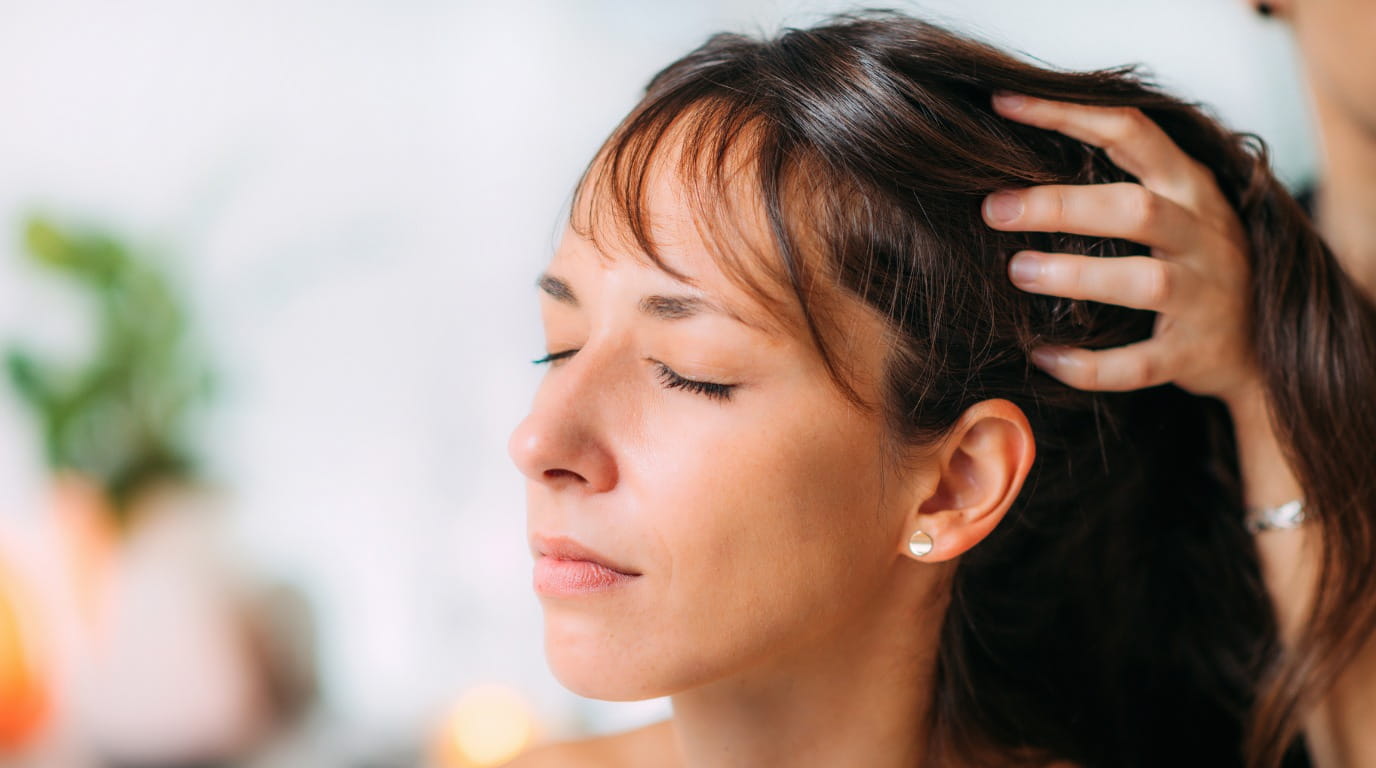
"A thorough scalp examination helps identify possible causes of thinning."
What Happens During a Hair Thinning Consultation?
If you're considering a consultation at RamaCare Polyclinic, here's a general idea of what the process typically looks like:
This structured approach exists because hair thinning is not a one-size-fits-all concern, and jumping straight to a treatment without understanding the cause rarely serves the patient well.
Hair Thinning Treatment Options
Once a cause (or set of contributing factors) has been identified, several treatment pathways may be discussed, depending on suitability.
PRP Hair Treatment
Platelet-rich plasma (PRP) therapy involves drawing a small sample of the patient's own blood, processing it to concentrate the platelets, and injecting this concentrated plasma into areas of the scalp experiencing thinning. The rationale is that platelets contain growth factors that may support the local scalp environment. PRP is performed in a clinical setting, typically as a series of sessions, and results — where they occur — tend to develop gradually rather than immediately. Recovery is generally short, though mild scalp tenderness or redness can occur in the days after treatment. PRP is not suitable or effective for every cause of thinning, and outcomes vary between individuals.
Hair PRP Treatment in DubaiHair Mesotherapy
Hair mesotherapy involves injecting a formulation of vitamins, minerals, amino acids, or other nutrients directly into the scalp. The general concept is to deliver supportive ingredients closer to the hair follicles than topical products can reach. It differs from PRP in that it does not use the patient's own blood-derived plasma, and the formulations used can vary. As with PRP, suitability varies by patient and underlying cause.
Hair Mesotherapy in DubaiMedical Management
For some causes of hair thinning — particularly those linked to hormonal, thyroid, or other medical factors — treatment may involve addressing the underlying medical condition itself. This is determined on a case-by-case basis and would be discussed as part of a personalized plan. We do not provide prescription or dosage information on this page, as this must be individualized by a clinician.
Nutritional Support
Where relevant, nutritional guidance may include maintaining a balanced diet, ensuring adequate protein intake, and correcting any confirmed deficiencies identified through testing. Unnecessary supplementation without a confirmed deficiency is generally not recommended.
Hair Transplant
For patients with more advanced or stable pattern hair loss, hair transplantation may be considered as a surgical option. This involves relocating hair follicles from a donor area to areas of thinning or loss. It requires careful candidate assessment, evaluation of donor hair availability, and an understanding that it is a surgical procedure with its own recovery period and limitations. It is not typically the first option considered for early or diffuse thinning.
PRP vs Hair Transplant in DubaiPRP for Thinning Hair
Because PRP is one of the more frequently discussed options for thinning hair, it deserves a closer look. PRP may be considered for certain patterns of thinning, particularly where follicles are miniaturized but still active — meaning they are producing finer hair rather than having stopped entirely. The treatment generally involves:
Blood Draw
A small sample is taken, similar to a routine blood test
Processing
The sample is spun in a centrifuge to separate and concentrate the platelet-rich plasma
Scalp Preparation
The treatment area is cleaned and, where needed, a topical numbing approach may be used for comfort
Injection
The concentrated plasma is injected into the areas of the scalp being treated, typically in a grid-like pattern across the thinning zone
Treatment plans vary considerably between patients — the number of sessions, spacing between sessions, and whether PRP is combined with other approaches all depend on individual assessment findings. Because PRP works by supporting the existing follicular environment rather than creating new follicles, results depend heavily on the health of the follicles being treated — this is part of why an accurate diagnosis matters so much before starting.
Results, when they occur, tend to develop gradually over multiple months, and regular follow-up is an important part of monitoring whether the treatment plan is working as expected.
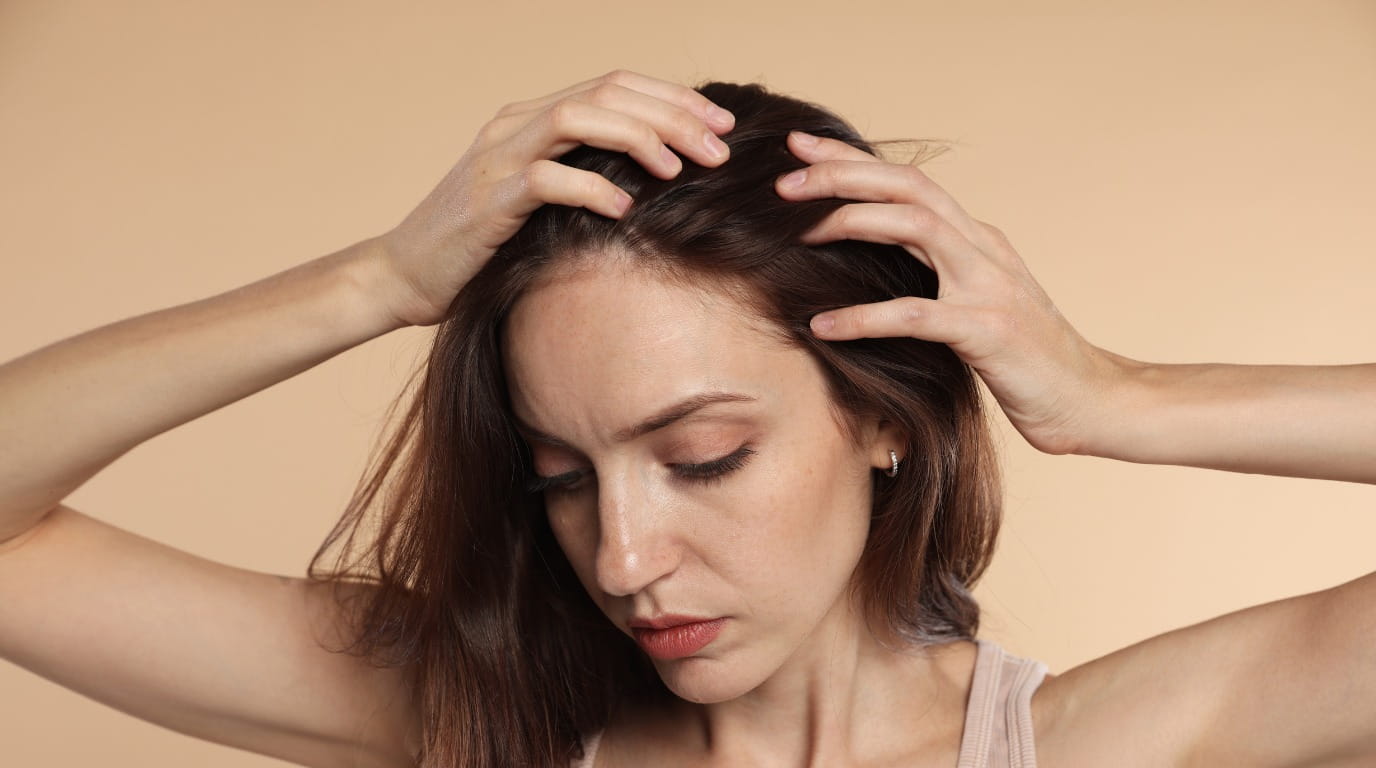
"PRP therapy involves injecting concentrated plasma into targeted scalp areas."
Related reading: PRP Hair Treatment Results, PRP Hair Treatment Before and After, PRP Hair Treatment Recovery, PRP Hair Treatment Cost in Dubai.
Hair Thinning Treatment Timeline
Patients often want a clear timeline, and while individual experiences vary, here is a general framework used to set expectations:
Baseline density and scalp evaluation; no treatment effect yet
This stage establishes what "before" looks like and confirms suitability for treatment
Minimal visible change; some patients notice reduced shedding
Early weeks are not usually indicative of final outcomes
Gradual changes may begin to appear for some patients, if they occur
Hair growth cycles are slow, so visible change takes time to develop
More meaningful assessment of whether density has improved, stabilized, or continued to change
Ongoing monitoring and, where relevant, maintenance sessions may be part of the plan
This timeline is general and educational — it is not a guarantee of what will happen in any individual case, and some patients may not experience meaningful change at all, depending on the underlying cause.
What Do Improving Hair Density Results Look Like?
It's worth noting that visual improvement and actual follicular change are not always identical — perceived improvement can be influenced by styling, lighting, and hair length, which is why photographic monitoring under consistent conditions is valuable. See more in our PRP Hair Treatment Results guide.
PRP Before and After Photos
Before-and-after photos are commonly used in hair treatment marketing, and while they can be informative, they should be interpreted carefully. Several factors can significantly affect how “after” photos look compared to “before” photos:
Because of these variables, another patient's before-and-after result should never be used to predict your own outcome. See our detailed PRP Hair Treatment Before and After page for a closer look at how to evaluate these images critically.
Factors That Affect Hair Thinning Treatment Results
Treatment outcomes are influenced by a wide range of factors, including:
Because so many variables are involved, treatment planning is necessarily individualized rather than standardized.
Hair Growth Cycle and Thinning
Understanding the natural hair growth cycle helps explain why hair treatments generally require patience:
The active phase during which hair follicles produce hair, typically lasting several years
A short transitional phase where hair growth slows and the follicle begins to shrink
A resting phase before the hair eventually sheds
The phase during which the resting hair is released from the follicle, making way for a new growth cycle to begin
Because each hair follicle moves through this cycle independently and the anagen phase alone can last years, any treatment aimed at supporting hair density needs time — often several months — before meaningful change can reasonably be assessed. This is one of the most common points of confusion for patients expecting faster results. Learn more in our full Hair Growth Cycle guide.

"Understanding the hair growth cycle explains why treatment results take time."
In men, hair thinning commonly follows recognizable patterns, including:
- Receding hairline, often starting at the temples
- Temple thinning, sometimes an early and subtle sign
- Crown thinning, frequently one of the first areas patients notice in mirrors or photos
- Male pattern hair loss (androgenetic alopecia), the most common overall cause
- Diffuse thinning, which is less pattern-specific and may prompt a broader diagnostic workup
Diagnosis matters before choosing a treatment path because male pattern thinning, diffuse thinning from other causes, and inflammatory scalp conditions can all present with somewhat overlapping symptoms but require different management approaches.
Women often experience hair thinning differently than men, commonly presenting as:
- Diffuse thinning across the scalp rather than a specific pattern
- A widening part line, often one of the earliest noticeable signs
- Postpartum changes, related to hormonal shifts after childbirth
- Menopause-related changes, linked to hormonal transitions
- Hormonal factors more broadly, including PCOS or thyroid-related changes
- Nutritional issues, which can be more prevalent in certain life stages
- Medical conditions that may contribute to hair changes
Because diffuse thinning in women often has multiple potential contributing causes, unexplained or progressive thinning is generally worth a proper assessment rather than assumption or self-treatment.
Comparing Approaches
Not every case of thinning requires — or is suitable for — surgical intervention. See how the general approaches compare:
| Non-Surgical Hair Treatments | Hair Transplant | |
|---|---|---|
| Treatment Type | Non-surgical (e.g., PRP, mesotherapy, medical management) | Surgical procedure |
| Main Purpose | Support existing follicle health and density where suitable | Relocate hair follicles from donor to thinning/balding areas |
| Surgical Procedure | No | Yes |
| Candidate Suitability | Often considered for early to moderate thinning with active follicles | Typically considered for more advanced or stable pattern loss with adequate donor supply |
| Recovery | Minimal, often none to a few days | Requires a dedicated recovery period |
| Timeline | Gradual results over months, often requiring maintenance | Gradual results over months, generally considered longer-lasting once healed |
| Long-Term Considerations | May require ongoing sessions to maintain effect | Transplanted follicles are relocated permanently, though surrounding native hair may continue to change over time |
The right choice depends entirely on individual assessment findings. Read a deeper comparison on our PRP vs Hair Transplant in Dubai page.
Hair Thinning Treatment Cost in Dubai
We intentionally do not list fixed prices here, because cost genuinely depends on several individual factors:
Because pricing is tied to your individualized treatment plan, the most accurate way to understand cost is through a consultation. For general guidance on PRP pricing specifically, see our PRP Hair Treatment Cost in Dubai page.
How to Track Hair Thinning
If you're concerned about hair thinning — whether or not you've started treatment — tracking change accurately over time is more useful than daily observation, which can be misleading due to lighting, styling, and even how recently you washed your hair. A more reliable method includes:
Daily self-checking often causes more anxiety than insight, since natural day-to-day variation in shedding and appearance is normal and doesn't necessarily reflect a meaningful trend.
Daily Habits That Support Healthy Hair
While daily habits alone are unlikely to reverse genetically driven hair thinning, they can support overall hair and scalp health:
These habits are supportive, not curative — they should be viewed as part of a broader approach rather than a standalone treatment for progressive or genetic thinning.
When Should You See a Hair Specialist?
While gradual, mild thinning is common and not always urgent, certain signs warrant more prompt professional evaluation:
If any of these apply to you, it's worth arranging an assessment sooner rather than continuing to monitor on your own. Learn more about finding the right professional on our Best Hair Specialist in Dubai page.
How to Choose a Hair Thinning Clinic in Dubai
Choosing where to seek treatment matters as much as choosing whether to seek treatment. Consider the following when evaluating a clinic:
Look For
- Qualified healthcare professionals involved in assessment and treatment
- Appropriate assessment rather than treatment offered without diagnosis
- Individualized treatment plans rather than generic packages
- Realistic expectations communicated clearly, without overpromising
- Transparent pricing, with costs explained rather than hidden
- Patient safety prioritized throughout the process
- Follow-up built into the treatment plan
- Evidence-informed recommendations, grounded in what is clinically appropriate for your case
- Clear communication about what a treatment can and cannot achieve
- No guaranteed results — a trustworthy provider will not promise outcomes that can't be guaranteed
Red Flags to Watch For
Be cautious of clinics or providers that show any of the following:
- Guaranteed hair regrowth claims
- One-treatment-fits-all packages offered without assessment
- Treatment recommended without any diagnosis
- High-pressure sales tactics
- Before-and-after photos that seem unrealistic or overly dramatic
- Unclear or unverifiable practitioner qualifications
- No discussion of risks, limitations, or realistic expectations
Hair Thinning Treatment in Dubai
Dubai has a wide range of hair and skin clinics, which makes it especially important to prioritize proper assessment and individualized planning over marketing claims when choosing where to seek a hair thinning treatment in Dubai. A reliable hair specialist in Dubai will begin with a thorough evaluation rather than moving straight to a specific procedure, and a trustworthy hair loss clinic in Dubai will be transparent about what a given treatment can realistically offer based on your individual diagnosis. Whether you're exploring a hair clinic in Dubai for the first time or comparing options for hair treatment in Dubai, the same principle applies: assessment before treatment, and realistic expectations throughout.
Why Choose RamaCare Polyclinic?
RamaCare Polyclinic approaches hair thinning as a clinical concern that deserves a structured, individualized process:
We do not make claims about success rates, patient volumes, awards, or guaranteed outcomes, because responsible hair care starts with honest expectations.
Frequently Asked Questions
Medical Disclaimer
Hair thinning can result from a wide range of causes, and treatment suitability differs significantly from person to person. The information on this page is intended for general educational purposes and cannot replace an in-person clinical assessment. If you are experiencing sudden, severe, painful, or patchy hair loss, please seek a professional evaluation promptly rather than relying on general information online.
Book a Hair Thinning Consultation in Dubai
If you've noticed changes in your hair density and want a clearer understanding of what's happening, a consultation at RamaCare Polyclinic is a good place to start. During your visit, we can discuss:
We won't promise guaranteed regrowth, a permanent cure, or results that work for everyone — what we can offer is an honest, structured assessment and a treatment plan built around your individual circumstances.
Related Hair Treatment Guides
Hair Loss Treatment in Dubai
A broader overview of hair loss causes and treatment approaches available in Dubai.
Hair Fall Treatment in Dubai
Explore treatment options specifically focused on managing excessive hair fall.
Hair Regrowth Treatment Dubai
Learn about approaches that may support hair regrowth for suitable candidates.
Hair PRP Treatment in Dubai
Our dedicated page covering PRP therapy in detail, including the procedure and considerations.
PRP Hair Treatment Results
A closer look at what PRP results can and cannot be expected to look like.
PRP Hair Treatment Before and After
Guidance on how to interpret before-and-after photos responsibly.
PRP Hair Treatment Recovery
What to expect in the days following a PRP session.
PRP Hair Treatment Cost in Dubai
An educational look at the factors that influence PRP treatment pricing.
Hair Growth Cycle
Understand the phases hair goes through and why treatments require patience.
Hair Loss Causes
A deeper dive into the many possible causes behind hair loss and thinning.
Hair Mesotherapy in Dubai
Learn about mesotherapy as an alternative or complementary treatment approach.
PRP vs Hair Mesotherapy
A side-by-side comparison to help you understand the differences between these two options.
PRP vs Hair Transplant in Dubai
Compare non-surgical and surgical approaches to hair restoration.
Best Hair Specialist in Dubai
Guidance on finding a qualified professional for your hair and scalp concerns.
Hair Loss Clinic Dubai
An overview of what to look for when choosing a hair loss clinic in Dubai.
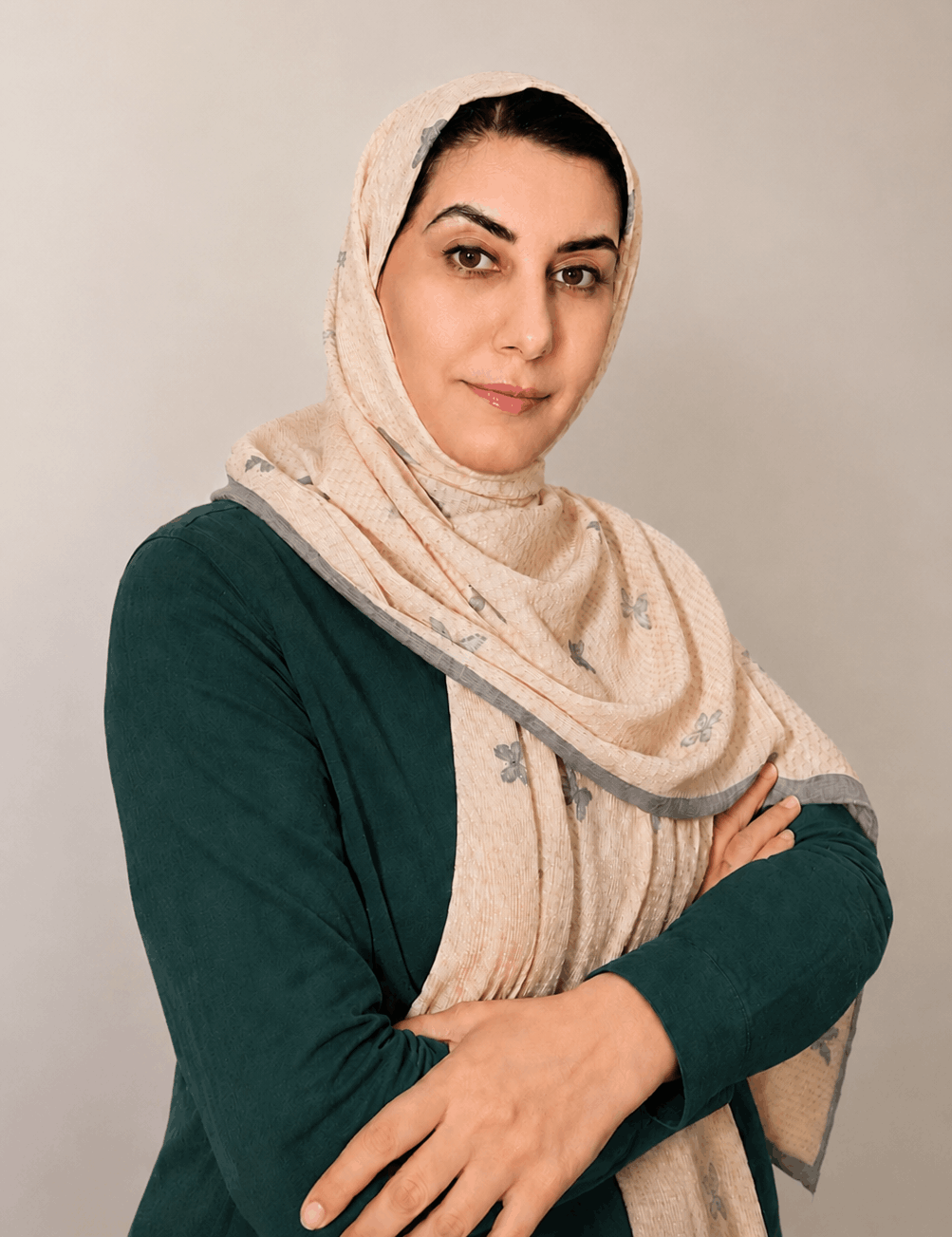
Content Reviewed by Dr. Sahar Zomorrodi
General Practitioner & Aesthetic Specialist
MD · DHA Licensed General Practitioner • 10+ Years Clinical Experience